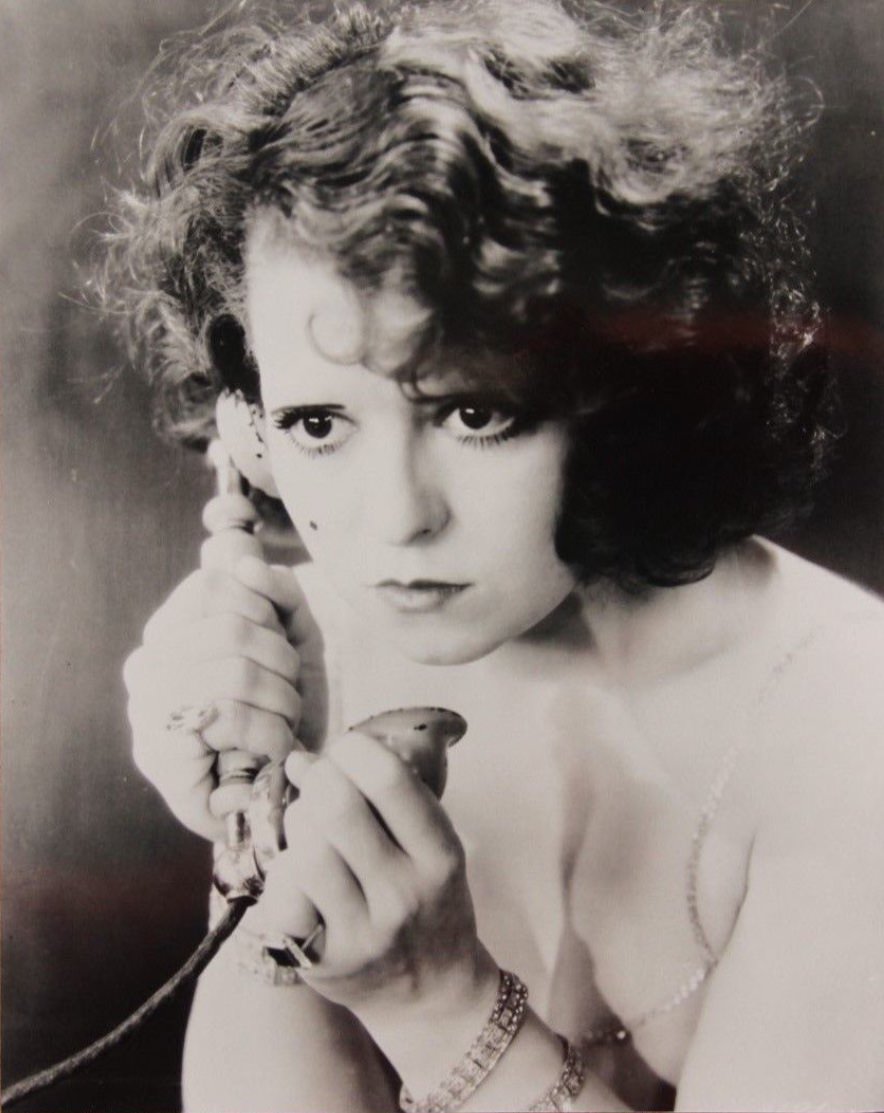
A tense hush seems to hang over Clara Bow as she grips a candlestick telephone, her gaze fixed somewhere just beyond the camera. Soft studio lighting catches the waves of her short curls and the smooth sheen of her bare shoulders, turning a simple close-up into a moment of suspense. It’s the kind of poised, intimate publicity portrait that promised audiences romance and trouble in equal measure.
Released in 1929, The Wild Party arrived at a turning point for Hollywood, when film stardom had to translate not only through expressions but also through the new presence of sound. Here, the props do some of the storytelling: the phone cord curling out of frame, the receiver pressed close, the jewelry glinting as if she’s been interrupted mid-evening. Bow’s face holds a mix of vulnerability and resolve that feels tailor-made for the era’s fast-paced “party” narratives and modern, urban anxieties.
For fans of classic cinema and silent-era icons, this image is a striking reminder of how studios crafted atmosphere with minimal elements—light, texture, and a single dramatic gesture. The photo also works beautifully as a piece of movie history ephemera, connecting the glamour of late-1920s screen culture to the everyday technology that was reshaping social life. Whether you’re collecting Hollywood portraits or revisiting The Wild Party (1929), Bow’s expression here is the hook that still pulls you in.