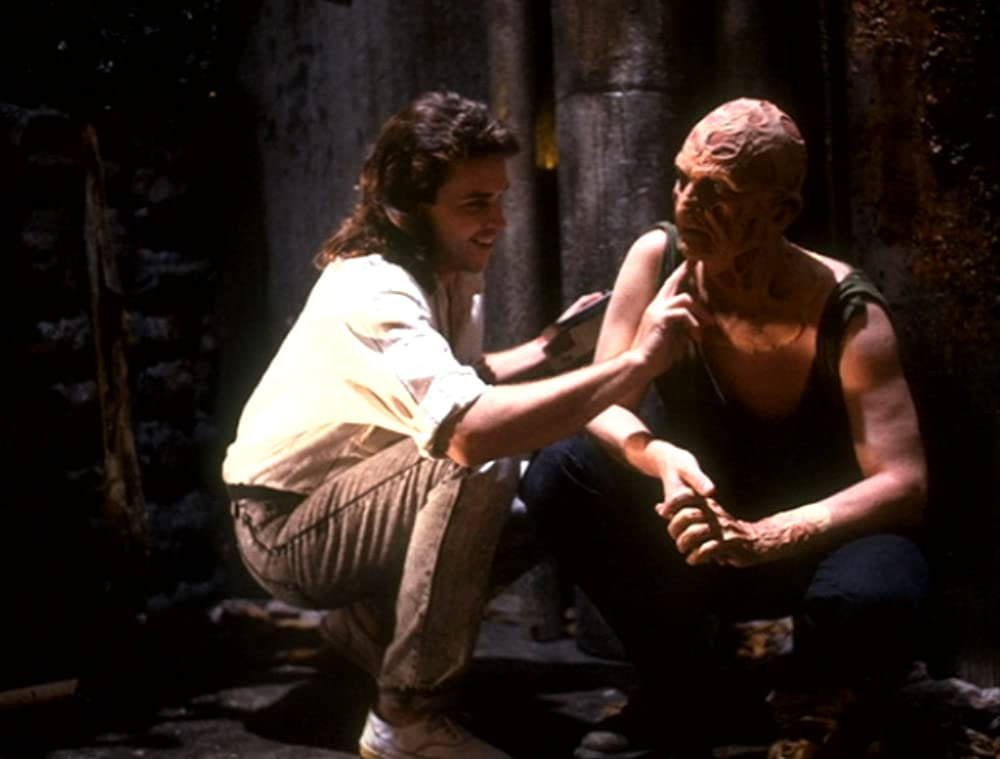
A quiet moment breaks through the grime and shadows on the set of *A Nightmare on Elm Street 5: The Dream Child* (1989), where a crew member leans in close to adjust a heavily made-up performer. The figure in prosthetics sits under stark lighting, skin textured and scarred for maximum nightmare effect, while the surrounding set looks like a damp, industrial corridor built to swallow sound and light. It’s the kind of candid behind-the-scenes photo that reminds you how much of horror is hand-crafted, one careful touch at a time.
Leaning, pointing, checking—these small gestures reveal the patience required to sell an illusion that flashes by in seconds on screen. The prosthetic appliance and makeup work appear intricate, with mottled tones and raised details that would read under hot lamps and harsh contrast, while the actor’s posture suggests they’re holding still between takes. For fans of the Elm Street franchise, images like this provide a rare look at the collaboration between performers and the effects team that shaped the film’s unsettling dream logic.
There’s also something unexpectedly human here: concentration, trust, and a shared goal to make the unreal feel convincing. Beyond the scares and surreal set pieces, *The Dream Child* is remembered for its practical effects era craftsmanship, when latex, paint, and lighting carried much of the burden of terror. If you’re searching for 1980s horror behind-the-scenes photography, Nightmare on Elm Street 5 production stills, or practical makeup effects inspiration, this snapshot delivers a vivid slice of movie history.