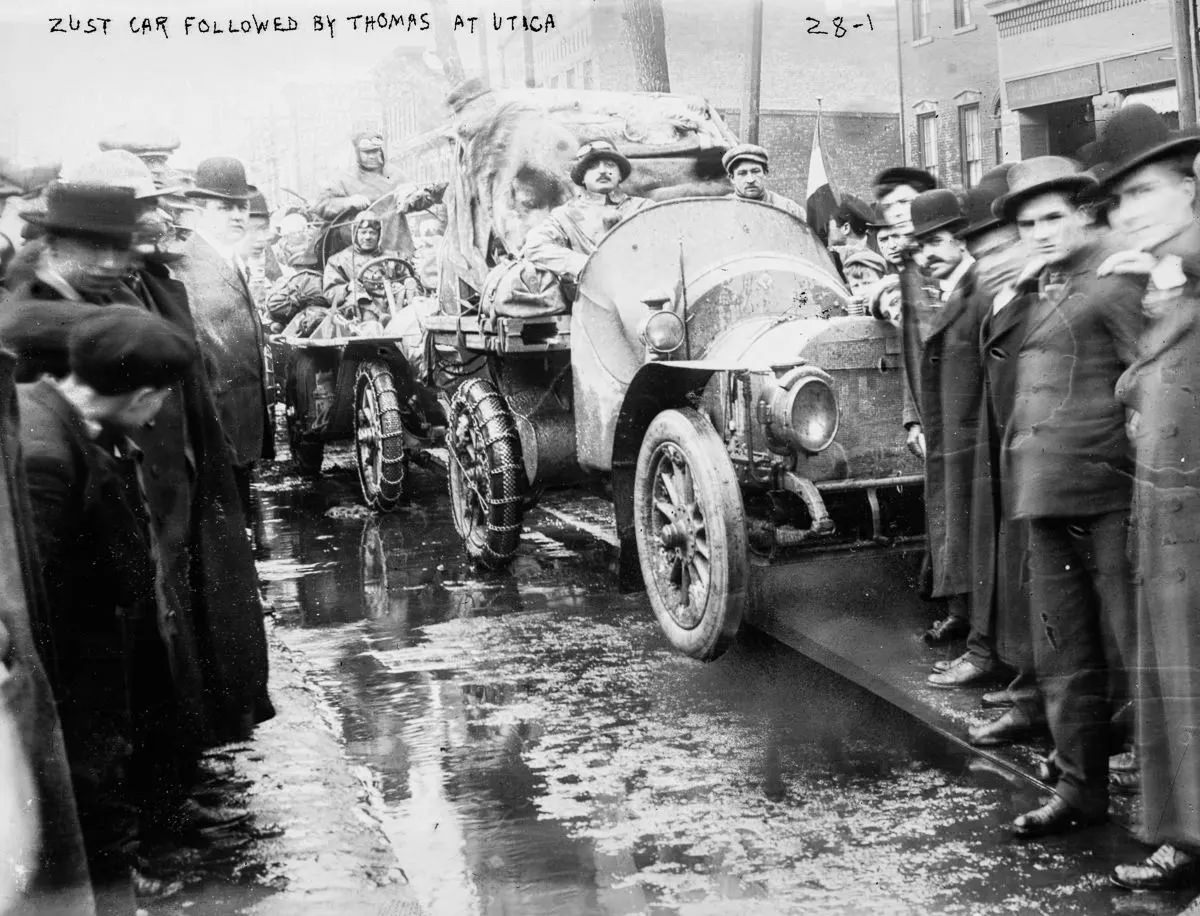
Utica, New York becomes a narrow corridor of spectators as Emilio Sirtori pilots the Italian Zust through a wet, churned-up street, with the American Thomas Flyer pressing close behind. The roadway shines with puddles and slush, and the crowd leans in from both sides, hats and overcoats forming a living barricade only inches from the wheels. In the center of the frame, the race machines look heavy and purposeful, their high-clearance stance and rugged tires hinting at the punishing miles already endured.
Mud spatters the Zust’s bodywork and fenders, while bundled crewmen ride along amid supplies lashed to the vehicles—an early reminder that endurance racing was as much about logistics as speed. The Thomas Flyer’s front end appears just over the Zust’s shoulder, emphasizing how tightly contested a passage through town could be when traffic control meant little more than human attention and good luck. Faces blur at the edges as people shift for a better view, giving the moment an urgent, almost crowded soundtrack even in silence.
Part of the Great New York to Paris Auto Race of 1908, this photograph preserves the strange meeting point of local street life and global ambition, when experimental automobiles were asked to behave like dependable travelers. The scene in Utica conveys the grit of early motorsport—slick surfaces, close quarters, and machines built to survive more than to shine. For readers exploring historic racing photos, early automobile history, or the legendary New York to Paris route, this image offers a vivid stop where international competitors and an American town briefly shared the same muddy stage.