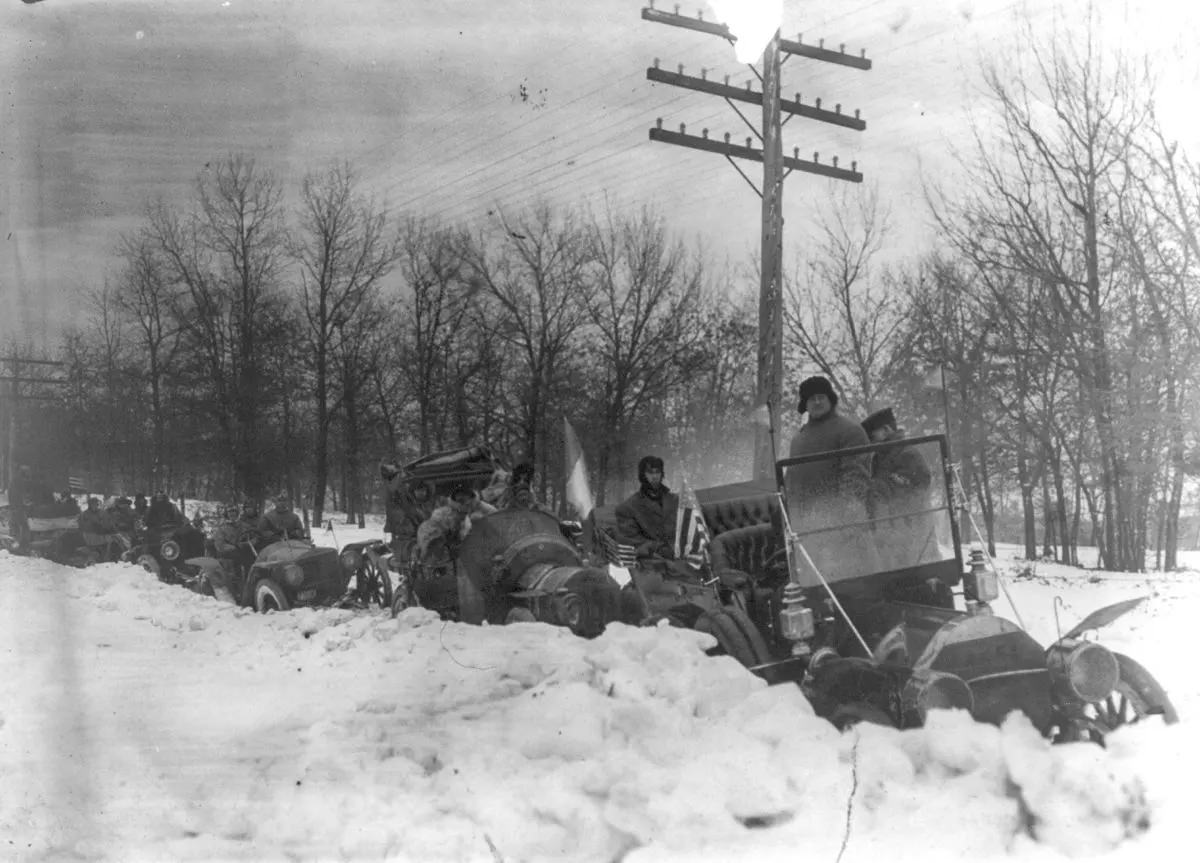
Snow piles up along a rural road as a line of early automobiles sits half-buried, their open cockpits and bundled passengers exposed to the raw winter air. Telephone poles march into the distance, bare trees frame the scene, and the cars’ rounded hoods and big headlamps look both sturdy and vulnerable against the drifts. In one striking detail, a small American flag hangs near the front of a car, a reminder that national pride rode alongside mechanical ambition in this epic contest.
Few sporting events in the early motor age tested endurance like the Great New York to Paris Auto Race of 1908, and the conditions here tell the story better than any slogan. These machines weren’t gliding down paved highways; they were wrestling with deep snow, uncertain traction, and the constant risk of getting stuck miles from help. The photo’s quiet tension—drivers waiting, crews watching, engines likely cooling—captures the reality behind the romance of “around-the-world” racing.
For readers drawn to historic photos of early automobiles, this moment offers a vivid glimpse into what long-distance motoring demanded: improvisation, patience, and grit. The New York to Paris race became legend not merely because of its route, but because it revealed how people and technology adapted when the road all but disappeared. Explore the images and you can almost feel the cold, hear the muted labor of digging out, and sense the determination that turned a snowy standstill into sports history.