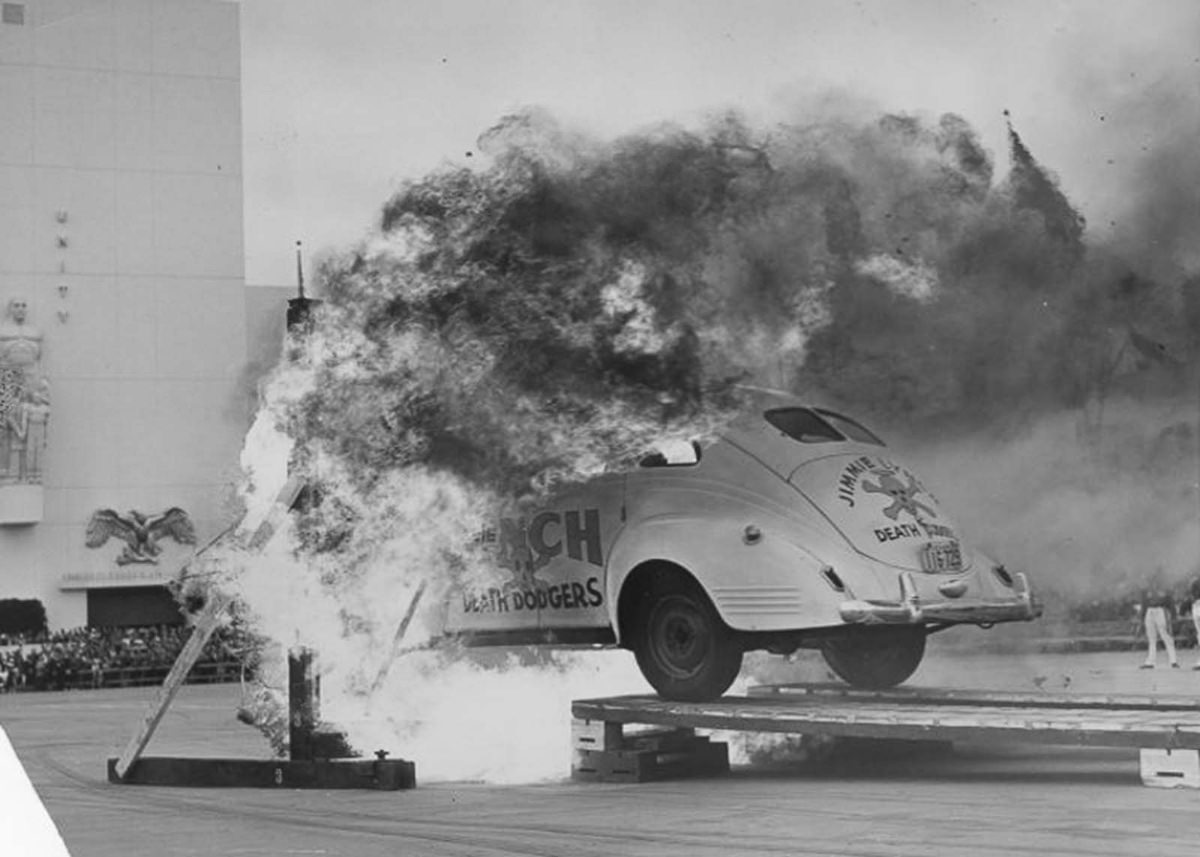
Roiling smoke and a burst of flame swallow the edge of an outdoor performance space as a stunt car climbs a low platform, its rear end lifting as if caught mid-leap. Painted lettering on the body advertises “Jimmie Lynch” and the “Death Dodgers,” turning the vehicle itself into a moving billboard for danger and showmanship. In the background, a crowd and a monumental building façade hint at a large public spectacle where the line between sport, theater, and mechanical mayhem was intentionally blurred.
During the 1940s, auto thrill shows drew audiences hungry for speed and spectacle, and teams like the Death Dodgers built reputations on controlled crashes, close calls, and choreographed destruction. The scene freezes that razor-thin moment when the stunt has gone loud—tires, heat, smoke, and metal—yet remains just within the bounds of performance. Even without hearing the engines or the crowd, the photograph communicates the era’s fascination with automobiles as both modern marvels and instruments of risk.
For WordPress readers interested in 1940s sports history, motorsport culture, and vintage entertainment, this image offers a vivid window into a forgotten corner of American popular amusement. It’s also a reminder that “sports” once encompassed more than organized leagues, extending to daredevil exhibitions staged for families and fairground crowds. The branded car, the pyrotechnic blast, and the public setting combine into a sharp snapshot of how thrill acts marketed danger—and how eagerly the public came to watch it.