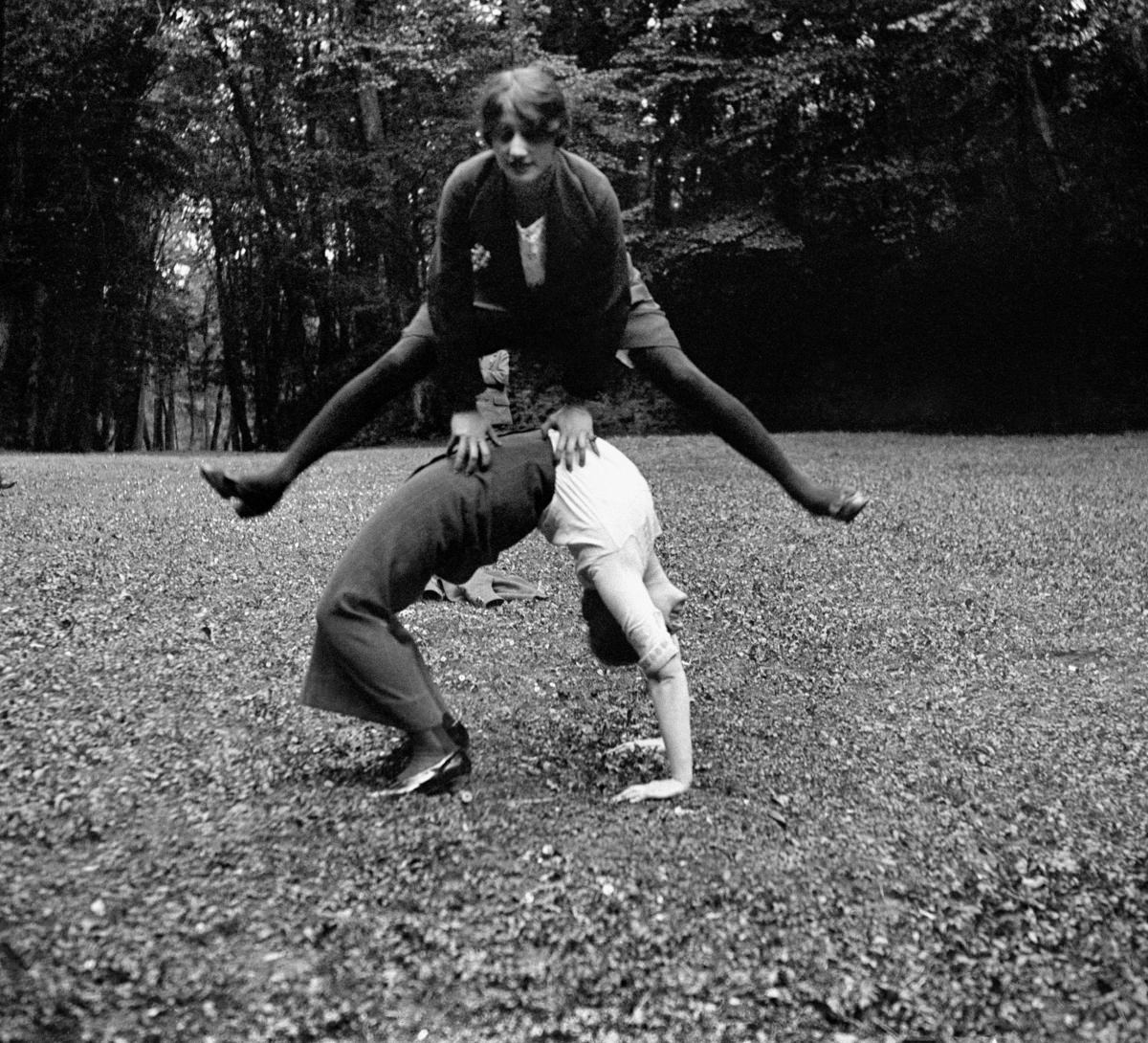
In the Marly Forest in March 1913, Simone and Golo turn an ordinary patch of grass into a stage for balance, strength, and trust. The pose is playful yet precise: one figure arched into a sturdy bridge while the other vaults over, legs extended in a confident straddle and hands set firmly for control. Behind them, the dark band of trees frames the moment like a natural backdrop, emphasizing bodies in motion against the quiet of the woods.
What makes this scene memorable is how it blurs the line between sport and companionship. Their clothing and posture suggest an era when “athletics” often meant informal practice—gymnastic drills, stretching, and outdoor exercise—captured not in a stadium but on a family outing. The expressions and physical closeness hint at shared rehearsal and laughter just outside the frame, a small demonstration of early 20th-century fitness culture lived in everyday life.
For readers interested in vintage sports photography, women’s athletic history, and pre-war European leisure, this image offers an intimate window into the period’s modern spirit. Marly Forest becomes more than a setting; it is part of the story, lending privacy and freshness to a fleeting performance of agility. Preserved as a family memory, the photograph still speaks clearly about movement, confidence, and the simple joy of being active outdoors.