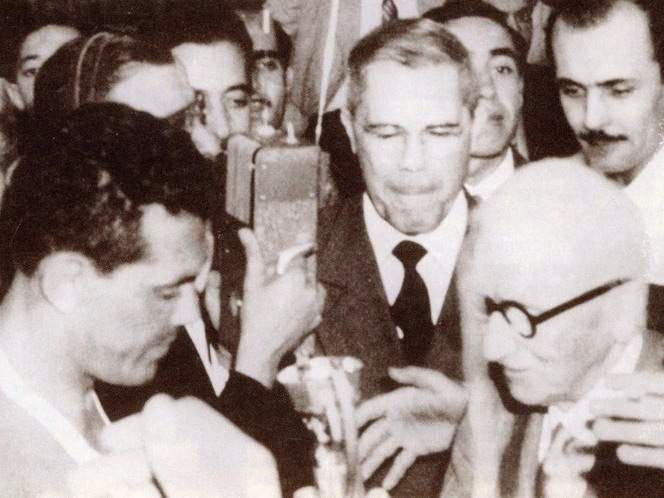
Pressed shoulder-to-shoulder on the pitch, a knot of officials, policemen, and journalists closes in as the World Cup trophy changes hands. At the centre of the commotion, FIFA president Jules Rimet appears intent on the formalities, while Uruguay’s captain—named in reports as Varela—leans in to receive the cup amid flashing cameras and strained smiles. The tight framing and hurried body language make the moment feel less like a ceremony and more like a scrum, as if the match’s shock still reverberates through the crowd.
Outside the edge of the photograph lies the story hinted at in the title: an unexpected Uruguayan victory that upended the organisers’ plans and the stadium’s mood. Accounts spoke of 169 cases of supporters treated for hysteria after the final whistle, a reminder of how football could spill over into mass emotion long before modern sports psychology had a name for it. Even the preparations—gold medals intended for Brazil and a celebratory samba song—became unused props of a result nobody wanted to imagine.
For readers drawn to World Cup history, this scene distils the collision of sport, politics, and spectacle that defines international football’s biggest stage. The trophy is small, but the stakes around it look enormous, surrounded by uniforms, notebooks, and lenses eager to fix the narrative. As a historical sports photo, it captures the instant when a tournament’s expected ending dissolved, and a new legend was handed over in the most crowded, chaotic way possible.