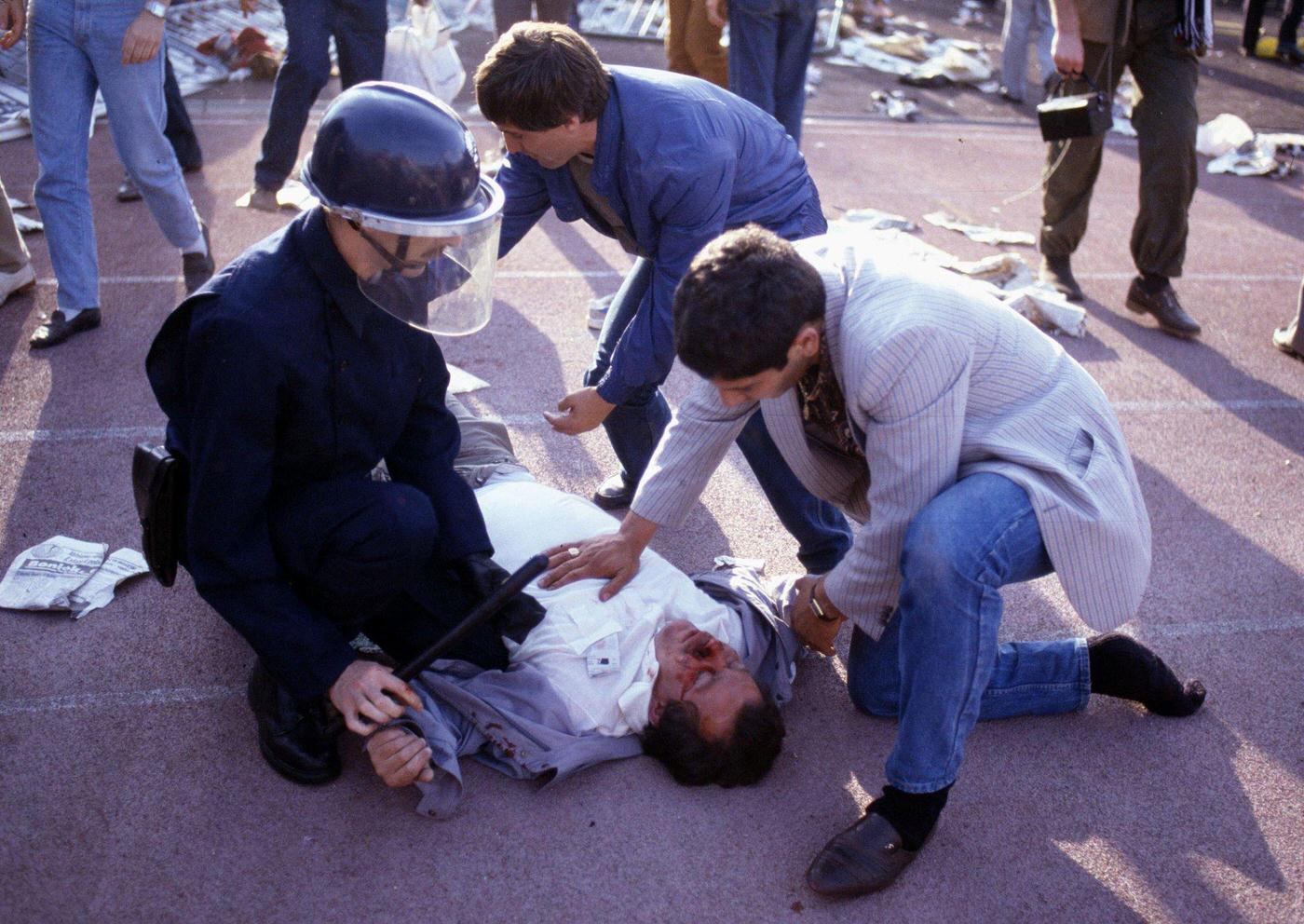
Kneeling on the hard stadium concourse, a riot policeman in helmet and visor leans in beside two civilians as they try to revive an injured football fan. The man lies on his back in a crumpled jacket, face marked with blood, while scraps of paper and discarded belongings scatter across the ground behind them. Even without seeing the match itself, the scene tells of panic and sudden collapse, where seconds mattered more than the scoreline.
Heysel Stadium’s 1985 European Cup Final is remembered not only for sport, but for the catastrophic crowd disaster that unfolded around it and the lives that were lost. Photographs like this anchor the tragedy in human scale: hands pressed to a chest, a baton set aside, strangers focused on keeping someone alive amid confusion. It is a raw reminder that football’s great gatherings can also expose the consequences of poor crowd management, inadequate infrastructure, and rising violence.
Long after the final whistle, the Heysel disaster reshaped European football, driving changes in stadium safety, policing approaches, and the governance of major tournaments. For readers searching the history of the European Cup Final 1985, this image offers more than documentation—it confronts us with the moment when celebration turned into emergency. Remembering it is part of understanding how modern matchday safety was written in the aftermath of that night.