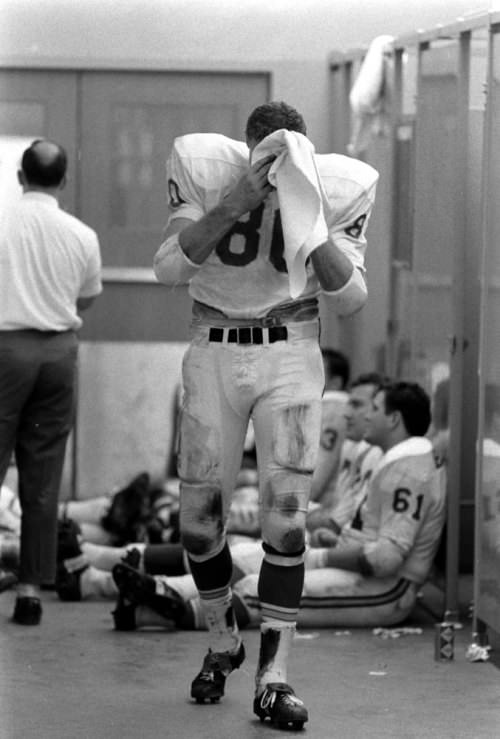
Inside the Kansas City Chiefs’ locker room after Super Bowl I, tight end Reggie Carolan stands in full uniform with a towel pressed to his face, the bold “81” on his chest doing the identifying. The narrow corridor, plain doors, and stark lighting create an unvarnished backstage setting, far from the bright spectacle of the field. Scuffed pants, taped socks, and heavy cleats underline the physical price of early pro football in an era when the game looked and felt rougher.
Around him, teammates sit along the wall in quiet clusters, some still helmetless and catching their breath, others staring ahead as if replaying snaps in their minds. A jersey number “61” is visible among the seated players, while a lone figure in street clothes stands to the side, suggesting coaches or staff moving through the postgame haze. The floor is littered with small debris and gear, the kind of detail that makes this moment feel immediate and lived-in rather than staged.
What lingers most is the privacy of emotion—exhaustion, disappointment, relief, or all three—captured in a single gesture that needs no caption to translate. For readers searching Kansas City Chiefs history, Super Bowl I memorabilia, or Reggie Carolan photos, this image offers something rarer than celebration: an honest glimpse of the human aftermath. It’s a reminder that the story of the first Super Bowl wasn’t only written in highlights, but also in the quiet minutes when players finally stepped away from the noise.