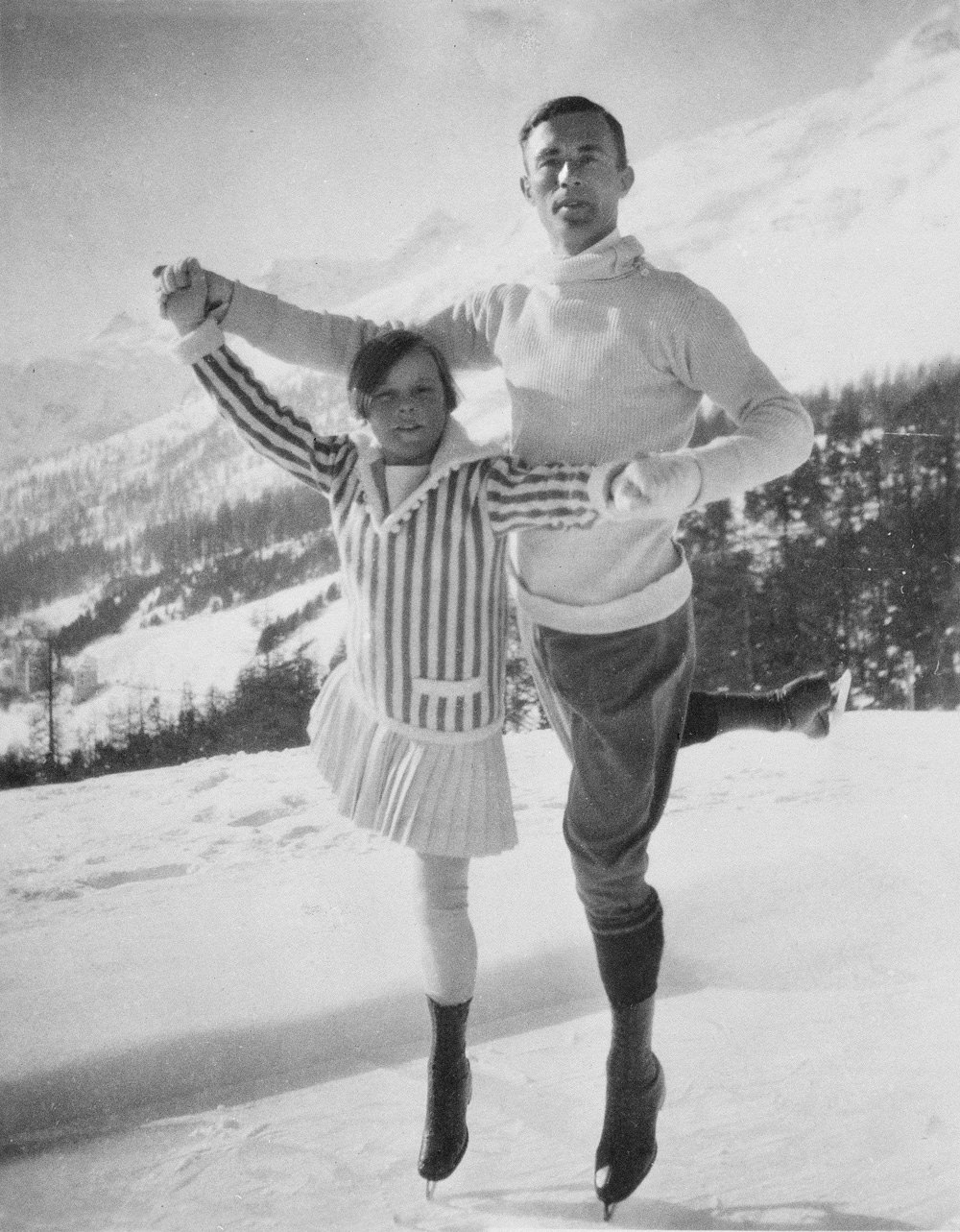
Against a sweeping Alpine backdrop, Norwegian prodigy Sonja Henie—only 11 years old—stands beside Sweden’s Gillis Grafström and holds a poised, practiced stance on the ice at the 1924 Olympic Games in Chamonix, France. Their raised arms and balanced posture turn a simple pose into a quiet performance, framed by bright snowfields and distant tree lines. It’s an intimate glimpse of figure skating at the First Winter Olympics, when the sport’s elegance was still being defined for a global audience.
Henie’s striped skating outfit and short skirt read as both practical and distinctive, while Grafström’s light sweater and gloves suggest the cold, high-mountain conditions under which early Winter Olympians competed. The skates themselves—thin blades under sturdy boots—anchor the scene in a period when equipment and training were far less standardized than today. Even in stillness, the photograph conveys the discipline of balance and the showmanship that made Olympic figure skating such a compelling spectacle.
Chamonix 1924 sits at the beginning of Winter Olympic history, and images like this help explain how international sport quickly became a shared cultural language. Here, two athletes from neighboring Nordic nations meet in France, embodying the Games’ mix of rivalry and camaraderie. For readers searching for historical Olympic photos, early figure skating, or Chamonix 1924 memorabilia, this moment offers a crisp, human-scale window into an era when modern winter sports were just finding their stage.