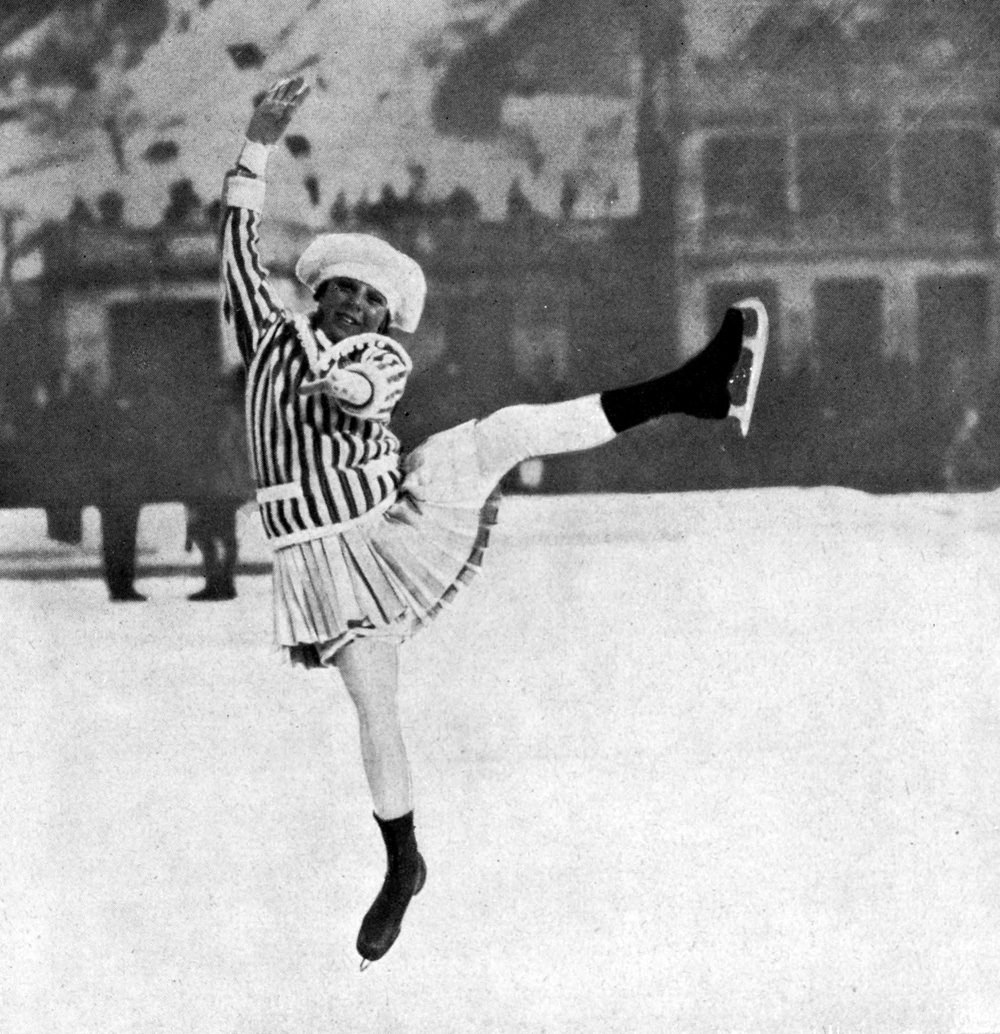
Against the snowy backdrop of Chamonix in January 1924, 11-year-old Norwegian skater Sonja Henie lifts into a bold extension, one leg carved out behind her as an arm reaches skyward. Her striped sweater, pleated skirt, and soft cap stand out against the pale ice, giving the moment a lively, almost theatrical clarity. Even with the background figures blurred into shadow, the focus stays firmly on the young athlete’s poise and nerve.
Early Winter Olympics images like this offer more than sporting nostalgia; they document a formative era when figure skating was still defining its modern language of jumps, lines, and presentation. The posture and costume hint at a time before today’s standardized outfits and television-ready arenas, when outdoor rinks and bundled spectators were part of the spectacle. In that sense, the photograph becomes a small window into the atmosphere of the first Winter Games, where elegance and endurance met the raw conditions of winter.
For readers searching the history of the Winter Olympics, Sonja Henie’s Olympic debut in Chamonix remains an unforgettable detail—an 11-year-old competing on the world stage at the very start of the event’s tradition. The picture preserves a fleeting second of balance and ambition, reminding us how quickly youthful talent can collide with global attention. It’s a simple frame, yet it carries the origins of Olympic figure skating and the enduring fascination of 1924 Chamonix.