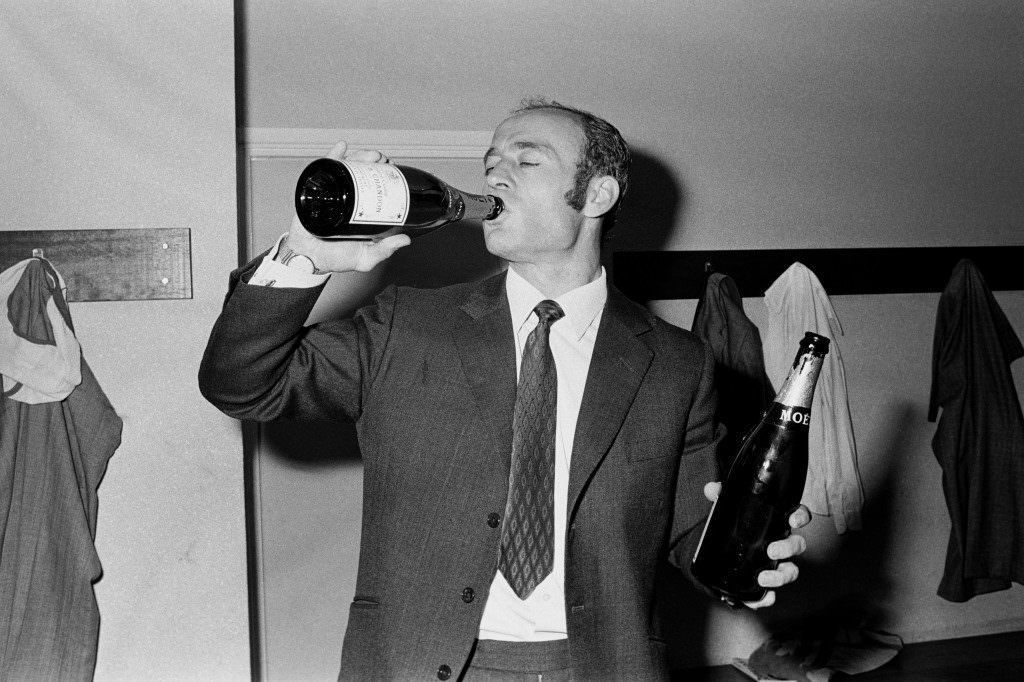
A suited figure in a cramped changing room tilts a champagne bottle back in mid-celebration, the stark flash freezing the moment against a line of hooks and hanging jackets. The scene feels more office-than-athletics at first glance—tie, jacket, and the tidy wall behind—yet the oversized bottles and relaxed posture signal the unmistakable release that follows a hard-fought win. It’s an intimate slice of soccer culture where victory spills beyond the pitch and into the everyday utilitarian spaces that teams called home.
What makes this kind of 1970s post-game photography so compelling is the access it implies: cameras close enough to catch private rituals, locker-room camaraderie, and the improvised glamour of “bathtime with the winners.” Sponsors’ labels and celebratory drink were part of the story, but so were the mundane details—coat pegs, bench corners, and the blunt geometry of a room built for function, not spectacle. These are the images that show how sporting success was documented before media training and tightly managed press zones became the norm.
For anyone researching vintage football history, changing-room scenes like this offer more than nostalgia; they reveal how athletes and staff performed triumph for one another, and for the lens, in the immediate aftermath of a match. The photograph anchors the post’s exploration of 1970s soccer locker rooms, winner’s celebrations, and the shifting boundaries of what photographers were allowed to see. Look closely and you can almost hear the laughter, the clink of glass, and the quiet hum of a team winding down—captured in a single, candid instant.