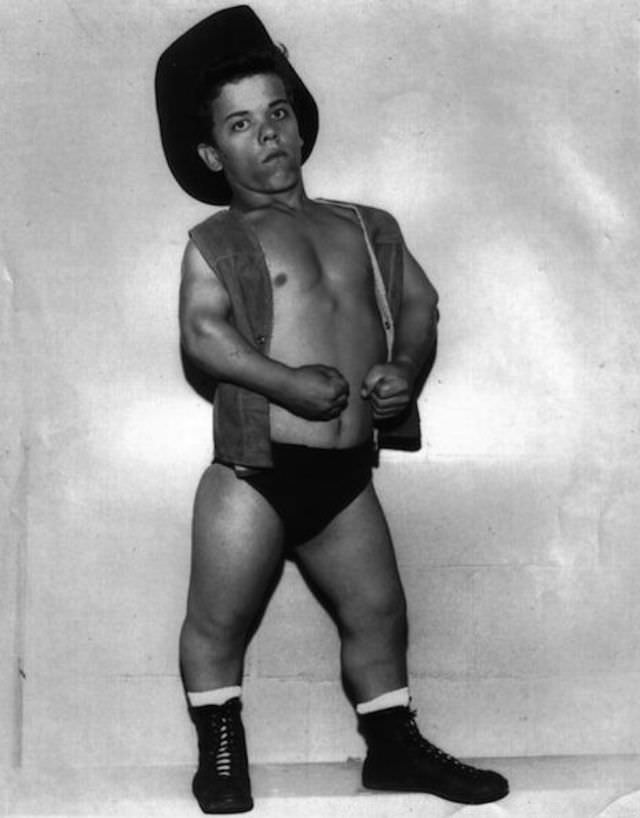
Cowboy Lang stands in a stark studio setting, hat tipped back and shoulders squared, projecting the practiced confidence of a performer who understood the power of an image. Wearing a Western-style vest with classic wrestling trunks and lace-up boots, he strikes a flexed pose that highlights compact strength and showmanship. The plain backdrop keeps attention on the persona—part prairie cowboy, part ring athlete—crafted for fans who wanted larger-than-life characters.
Born Harry Lang in Saskatchewan, Canada on August 28, 1950, he’s remembered under the colorful moniker “Cowboy Lang,” a nickname that signals the era’s love of bold identities in sports entertainment. The costume choices in the photo echo that tradition: a simple hat and vest do a lot of storytelling, suggesting ruggedness without needing props or scenery. Even without a visible venue or promotional text, the portrait reads like a publicity shot meant to travel—posters, programs, or press materials designed to build anticipation.
For readers browsing vintage wrestling photography, Canadian sports history, or classic athlete portraits, this image offers a direct glimpse into how fighters marketed themselves and how audiences were invited to believe in the character. The lighting and pose emphasize physique and attitude, while the minimalist composition gives it a timeless, archival feel. As a historical photo tied to Cowboy Lang’s origins, it’s a reminder that a single well-chosen look could define a career and lodge a name in memory.