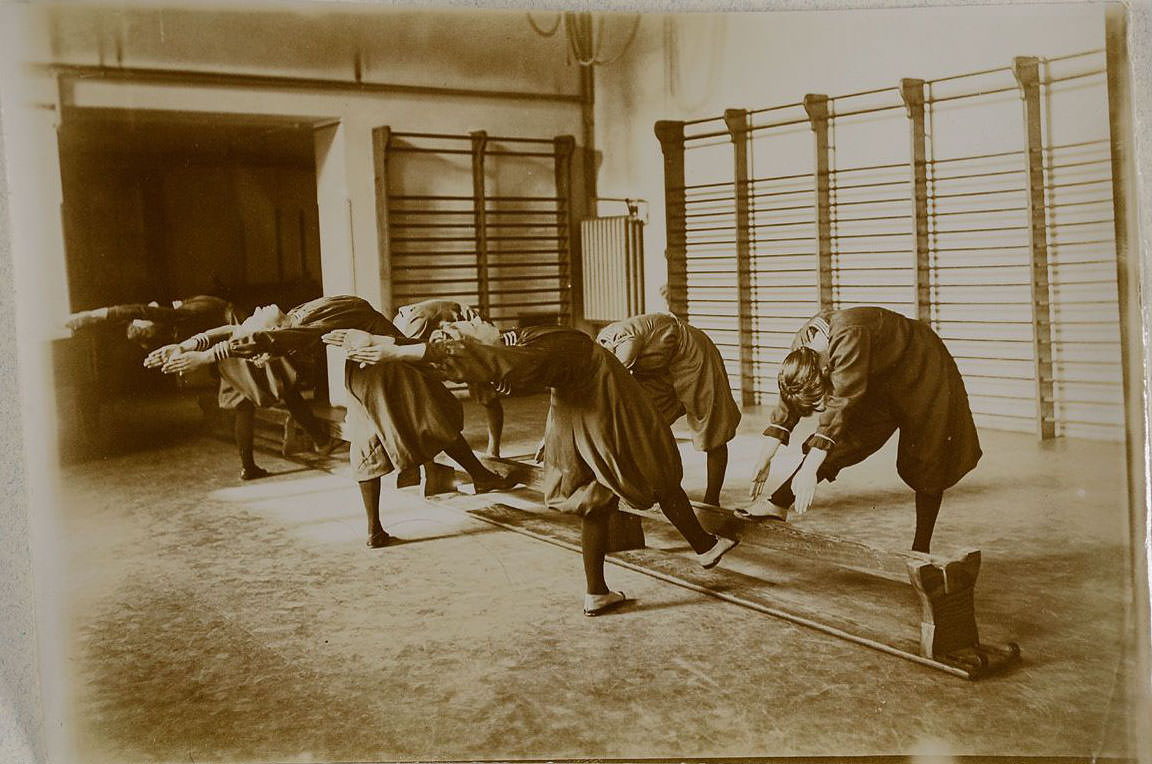
Bent forward in a clean line, a group of German women move through Swedish gymnastics with a calm, practiced precision. The hall around them feels spare and functional, with wall bars and open floor space that suggest a dedicated training room rather than a casual gathering. Their uniformed clothing and synchronized posture give the scene an almost choreographed rhythm—exercise as discipline, not spectacle.
Swedish gymnastics, known for its structured, health-focused routines, spread widely across Europe and found a place in early 1900s physical culture. In Heinrich, Germany, this kind of indoor practice points to the era’s growing interest in posture, flexibility, and controlled movement, especially in organized settings such as schools, clubs, and community programs. The photograph’s quiet order—arms extended, torsos hinged, legs set—captures how fitness was taught as a method and a mindset.
Details in the room pull the viewer deeper into the everyday world of women’s sports history: the sturdy wooden equipment, the polished simplicity of the space, and the way the group shares a single tempo. For readers searching for early 20th-century German sports, Swedish gymnastics history, or women’s fitness in Europe, this image offers an intimate glimpse of training culture before modern athletic branding took over. It’s a reminder that long before contemporary workouts, there were carefully taught routines built on balance, form, and communal effort.