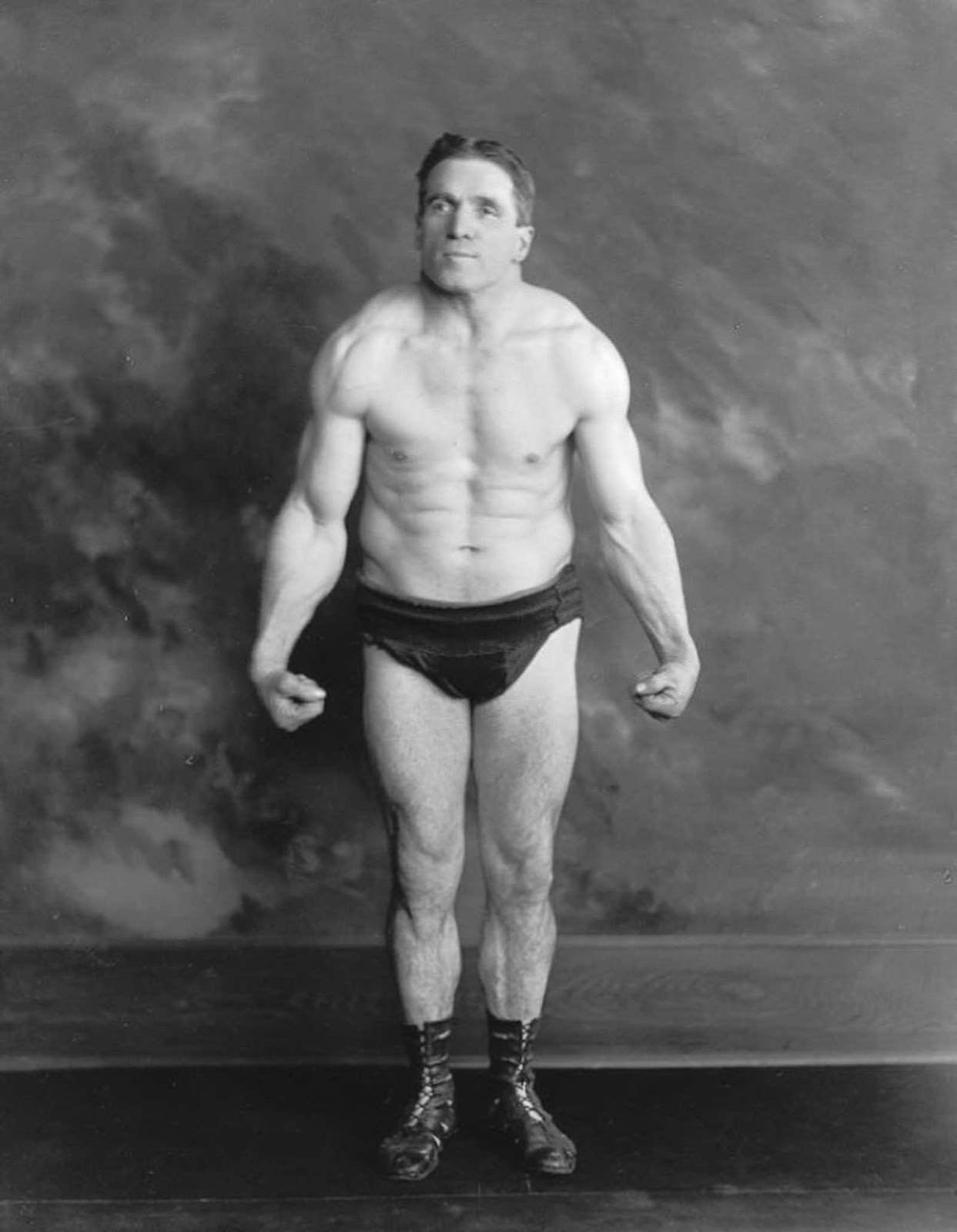
A. Dandurand stands squarely before a plain studio backdrop, bare-chested and poised with clenched fists, presenting a physique built for display as much as for strength. The composition is simple and deliberate: the body becomes the subject, with broad shoulders, defined arms, and a steady, focused expression drawing the eye. Dark posing trunks and lace-up boots ground the portrait in the practical athletic styling of the era.
In 1927, bodybuilding and physical culture were increasingly visible parts of popular sport, promoted through exhibitions, gymnasiums, and studio portraits like this one. Rather than action or competition, the camera records symmetry, conditioning, and the controlled “pose” that helped shape what modern bodybuilding would become. The lack of props or scenery suggests the photograph’s purpose was documentation and promotion—an athlete presenting his form with confidence.
For readers interested in early bodybuilding history, vintage fitness photography, and the evolution of strength sports, this image offers a vivid reference point. It captures how athletes of the early 20th century crafted public images of health, discipline, and muscular idealism long before today’s stage lighting and supplements. As a historical sports portrait, “A. Dandurand, 1927” preserves a moment when the modern bodybuilder was still being defined.