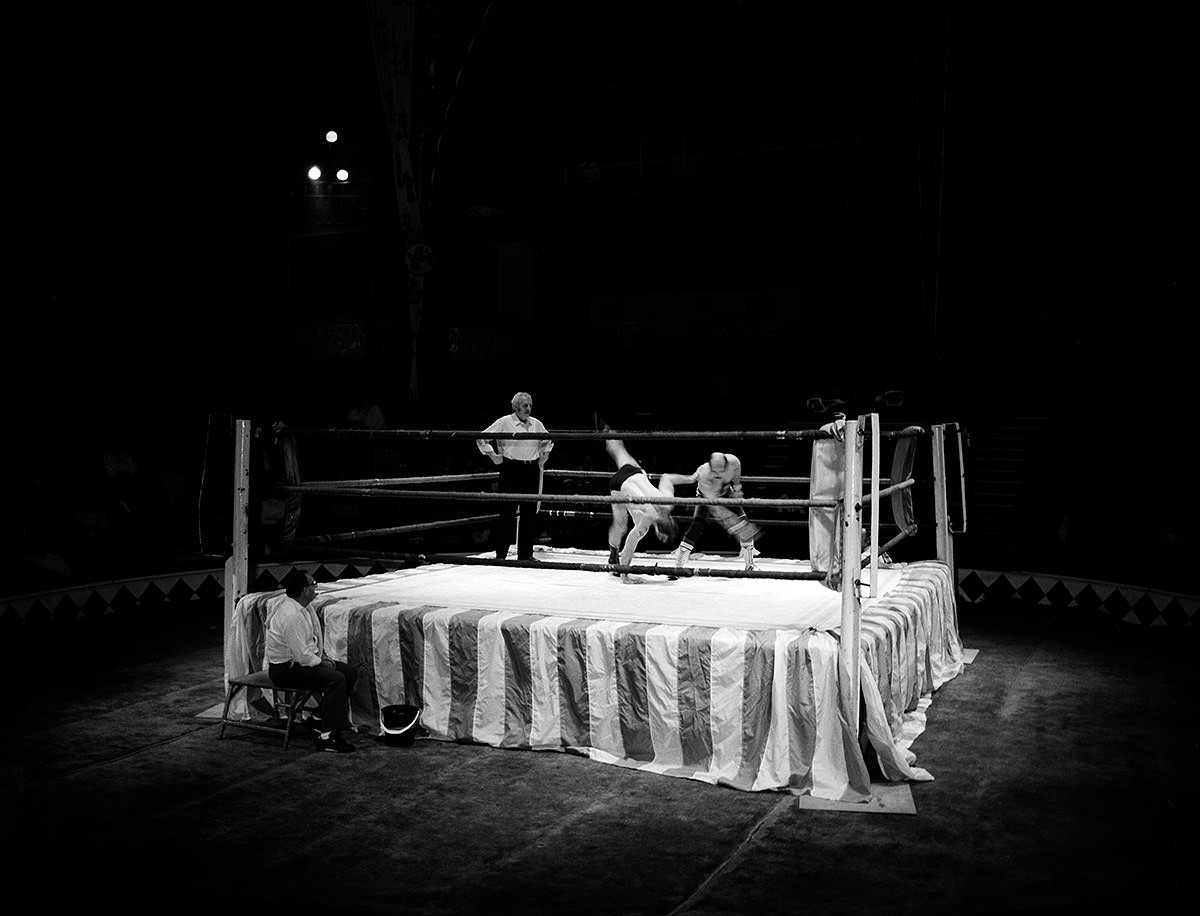
Under a hard pool of arena light, two wrestlers tangle near the ropes as a lone official stands watch, his posture calm against the sudden blur of a throw. The ring itself feels like a small stage set in a sea of darkness, with striped skirting around the apron and thick corner posts that hint at a well-used venue. Even without faces in close-up, the body language tells the story: leverage, balance, and the split-second decision that turns grappling into spectacle.
British wrestling in the 1980s carried a particular atmosphere—part sport, part showmanship—often played out in modest halls where the audience sat close enough to hear the canvas slap. The photo’s spare background and concentrated lighting evoke that intimate, almost theatrical tradition of combat sports entertainment that once drew families and regulars alike. Details like the ringside chair, the taut ropes, and the open space beyond the ring help place the action in a working, everyday setting rather than a glossy modern production.
For anyone searching the history of wrestling in England, images like this offer a grounded reminder of what fans actually saw: gritty technique, simple staging, and a community event feel that has become harder to find. The scene invites questions about the promotion, the local circuit, and the routines that shaped a night out in Britain’s lost wrestling culture. It’s a snapshot of a popular pastime—one that deserves remembering alongside the decade’s better-known sports headlines.