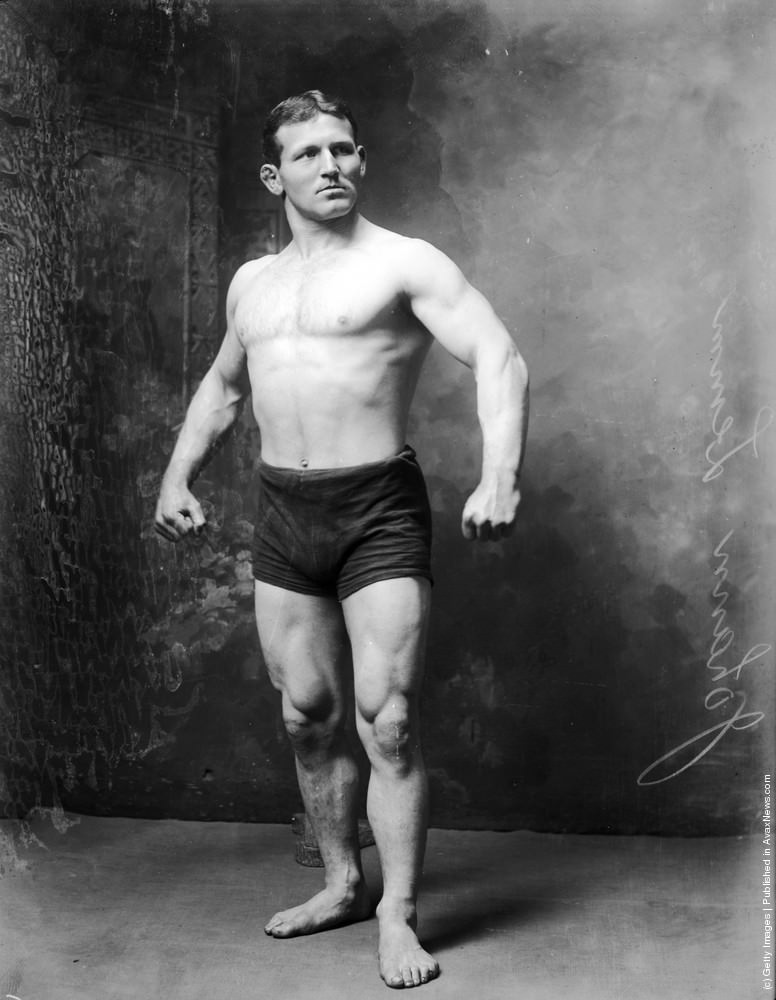
Johann Lemm stands in a studio pose that feels half athletic demonstration, half stagecraft, his torso angled and fists set as if a bout could begin at any moment. Shot in 1908, the portrait emphasizes solid shoulders, powerful legs, and the calm concentration of a professional wrestler used to being watched. The plain trunks and bare feet keep the focus on the body itself—strength presented as proof, not decoration.
Behind him, a mottled backdrop and soft, smoky lighting create a theatrical atmosphere typical of early sports photography, when wrestlers were marketed as modern strongmen. The careful composition turns muscle into silhouette and texture, while his gaze off to the side suggests confidence rather than aggression. Even without a ring in view, the image communicates the era’s fascination with physical culture, endurance, and disciplined training.
For readers interested in turn-of-the-century wrestling history, this photograph offers a vivid window into how athletes were promoted and remembered at the dawn of mass media. It’s also a compelling piece of visual culture: a 1908 sports portrait where identity is built through posture, lighting, and the austere simplicity of the studio. Whether you’re researching early wrestling, vintage athletic portraits, or the history of physical fitness, Johann Lemm’s image remains strikingly direct.