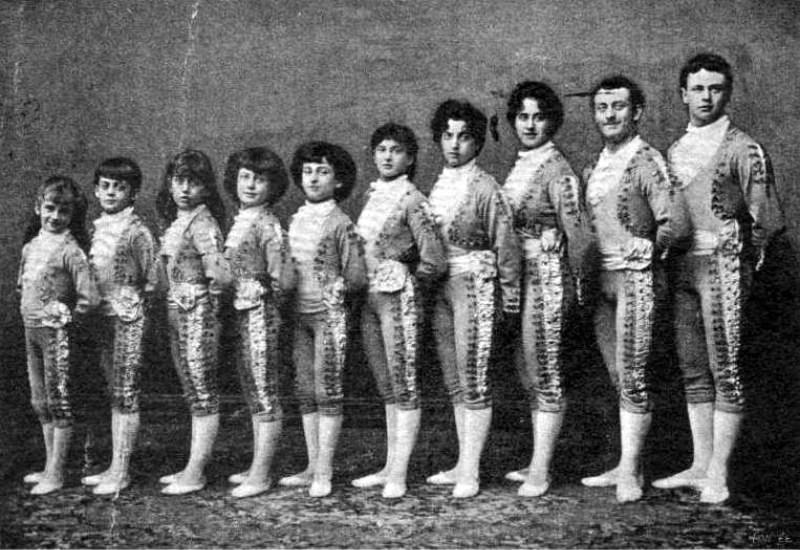
Lined up shoulder to shoulder, the Kremos present themselves like a human measuring stick of skill and kinship, each figure turned in profile with hands on hips and eyes set toward the camera. Their matching performance costumes—decorated jackets, fitted trousers, and light shoes—signal a professional troupe rather than a casual family portrait. The careful spacing and consistent stance suggest discipline, rehearsal, and the kind of unity audiences expected from circus and variety acrobatics.
What stands out is the mix of ages and physiques, hinting at two generations training and touring together, a hallmark of late 19th- and early 20th-century family acts in Europe. The studio-like backdrop keeps attention on posture and proportion, inviting the viewer to imagine what happens once the stillness breaks: tumbling lines, pyramids, hand-to-hand balances, and synchronized routines built on trust. In a single frame, the photo communicates the blend of sport, theater, and family labor that powered popular entertainment before film and radio took center stage.
For readers searching the history of Swiss acrobats, circus families, and early modern athletic performance, the Kremos offer a vivid entry point into how physical culture became a livelihood. Their uniform presentation doubles as marketing—an advertisement of reliability, elegance, and strength—while also preserving a rare look at costume and staging conventions of the era. This post explores that legacy, using the photograph as a window into the endurance, training, and intergenerational craft behind a celebrated acrobatic family.