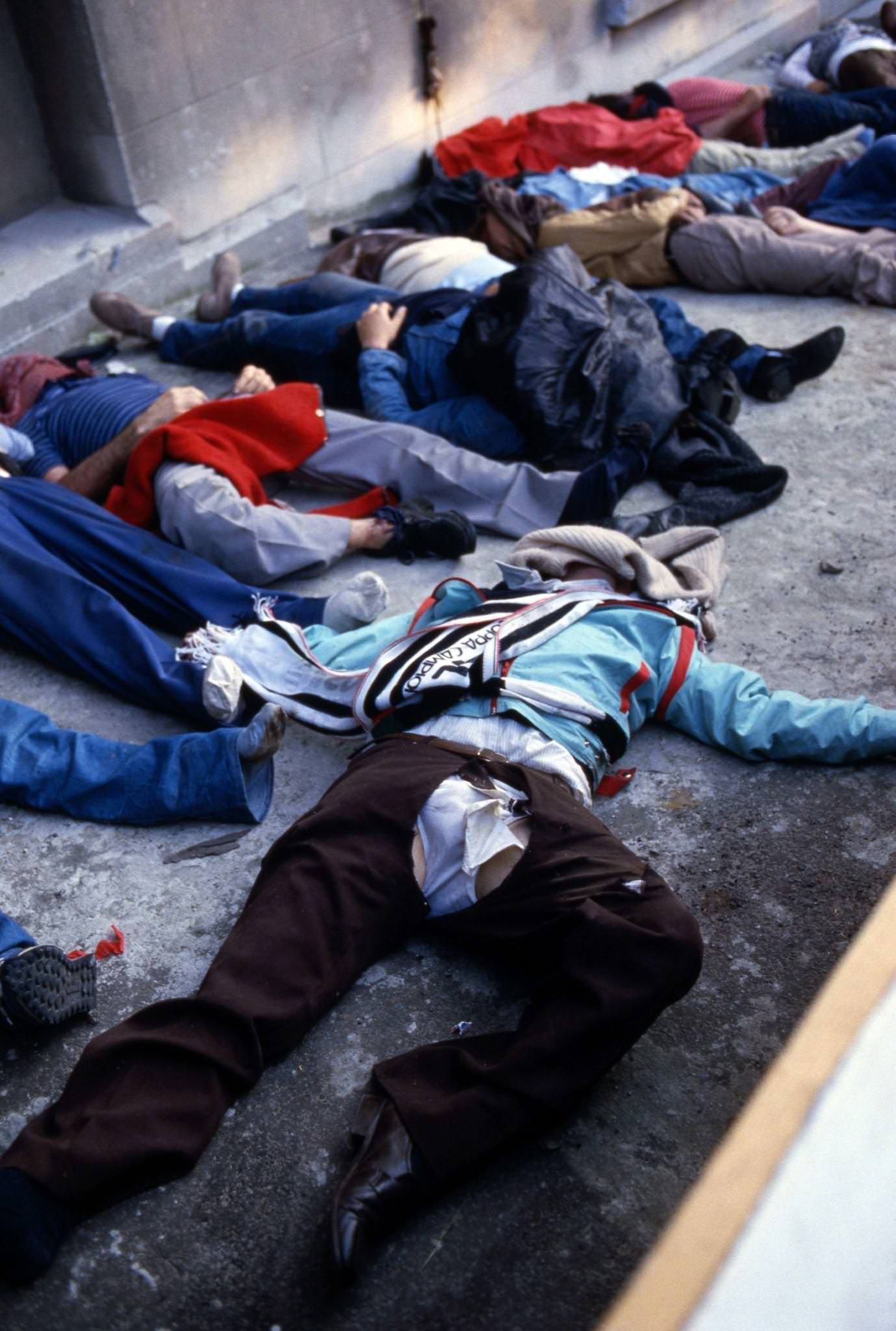
Along a bare stadium wall, bodies lie motionless on the concrete, coats and scarves pulled tight or thrown aside in the scramble, their everyday clothing turned into a grim inventory of a night that spiraled beyond control. The frame is close and unflinching, focusing on the aftermath rather than the match itself, with Juventus colors visible among the scattered figures and belongings. It is a harrowing reminder that the European Cup Final between Liverpool and Juventus in 1985 became synonymous not with footballing glory, but with catastrophe.
Heysel is often discussed in terms of crowd disorder and structural failure, yet photographs like this insist on the human cost—supporters who arrived for a celebration and instead met panic, crushing, and silence. The starkness of the setting, the hard ground and featureless barrier, underscores how quickly a sporting venue can become a disaster scene when safety collapses. Even without showing the wider stands, the image communicates the scale of trauma that left 39 dead and countless others scarred.
For readers searching the history of the Heysel Stadium tragedy, this post offers a sobering encounter with one of European football’s darkest chapters and the lasting reforms it helped force into being. The Liverpool vs. Juventus final of 1985 remains a turning point in discussions about stadium design, crowd management, and accountability, precisely because the consequences were so irreversible. Remembering Heysel means resisting the urge to look away, and holding onto the lesson that safety must never be secondary to spectacle.