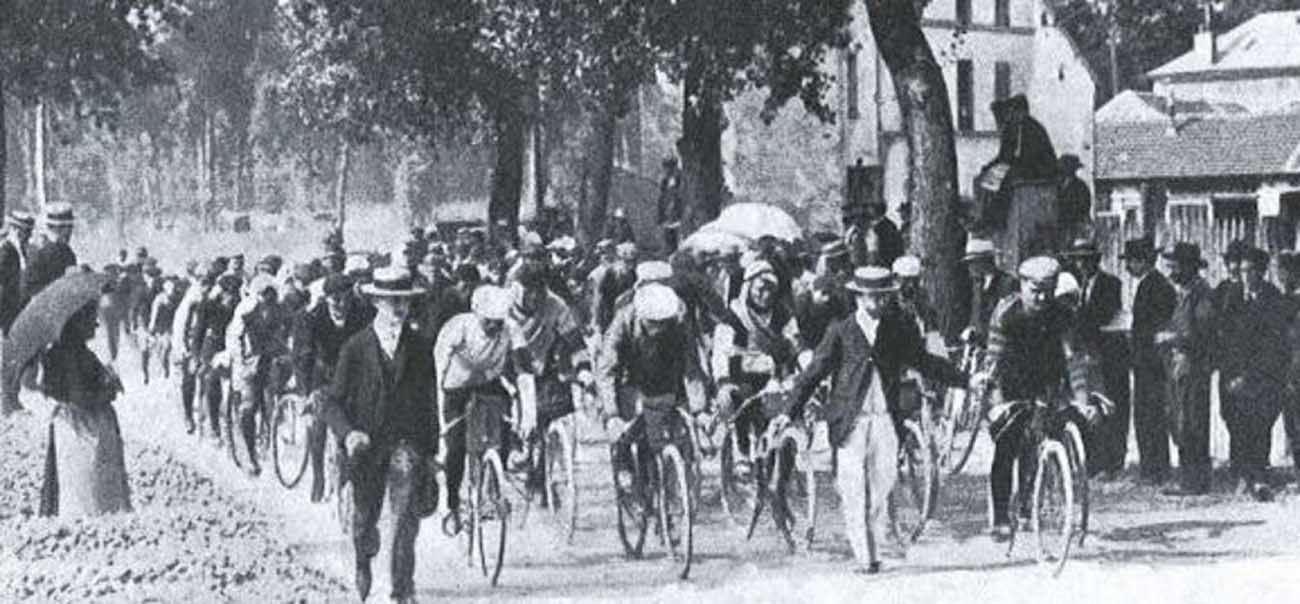
Along a tree-lined road, a tightly packed group of early Tour de France riders rolls forward on slender bicycles while spectators in hats and long coats crowd the edges, turning the race into a street-level spectacle. The scene feels less like a sealed sporting arena and more like a moving public festival, where the peloton and the people share the same dusty space. Even without modern barriers, the energy is unmistakable: bodies leaning in, wheels close, and eyes trained on the unfolding contest.
What stands out in these 1903 Tour de France photos is how raw and improvised endurance cycling appears, with simple gear and everyday clothing replacing today’s sleek uniforms and support convoys. The riders’ posture and the tightly clustered formation suggest tactics already taking shape—drafting, patience, and the constant calculation of when to push. At the roadside, the crowd’s proximity hints at how intimate the early Tour experience was, as if the nation itself had stepped outside to watch history pass by.
For anyone searching for Tour de France history, early cycling imagery, or the origins of professional road racing, this post offers a vivid window into the sport’s first edition. The photograph’s blurred motion and uneven light underscore the limitations of the era while making the moment feel even more immediate, like a memory caught on the fly. Together with the title’s promise of fascinating historical photos, it invites readers to trace how the Tour began as a daring experiment and grew into a global sporting tradition.