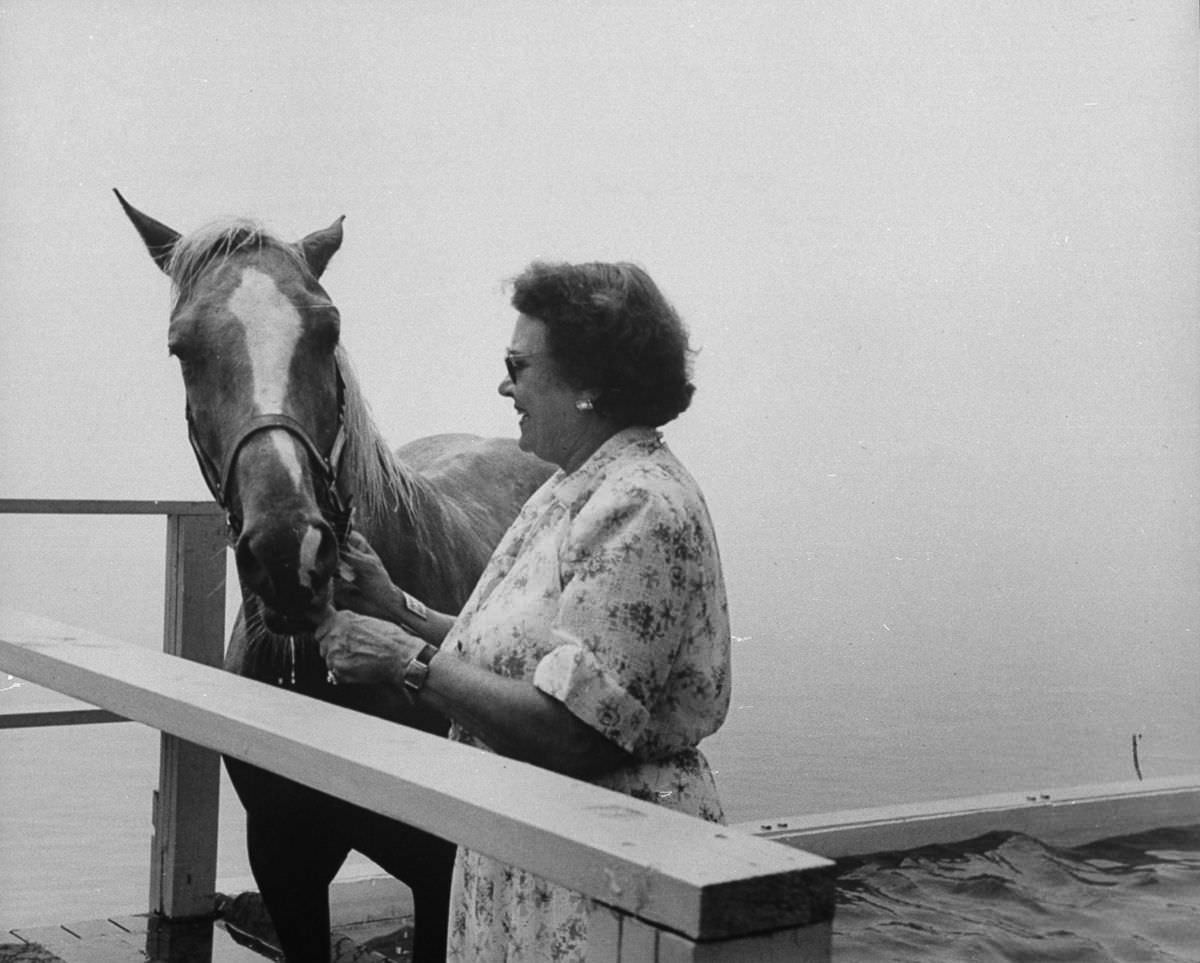
Fresh from the water, the horse stands at the edge of a wooden platform while a trainer leans in close, offering a reward and a calm, reassuring touch. The wet coat and simple railings hint at a working setup rather than a glamorous stage, where repetition and trust mattered as much as spectacle. In 1953, moments like this were part of the routine behind horse diving shows—brief pauses between risky runs and carefully practiced leaps.
What makes the scene compelling is its quietness: no crowd is visible, only open sky and the suggestion of a pool below, turning attention to the relationship between human handler and animal athlete. The trainer’s posture reads as both praise and check-in, the kind of hands-on care that follows a demanding stunt. It’s a reminder that even the most sensational performances depended on small rituals of training, reward, and reassurance.
Horse diving sits at an unusual intersection of sports history, entertainment, and animal training, and this photograph captures that tension without needing theatrics. For readers searching for mid-century stunt shows, equestrian training, or vintage sports photography, the image offers an intimate look at the work behind a dangerous crowd-pleaser. The reward after a successful practice dive becomes a symbol of the era’s appetite for risk—and the daily discipline required to make it look effortless.