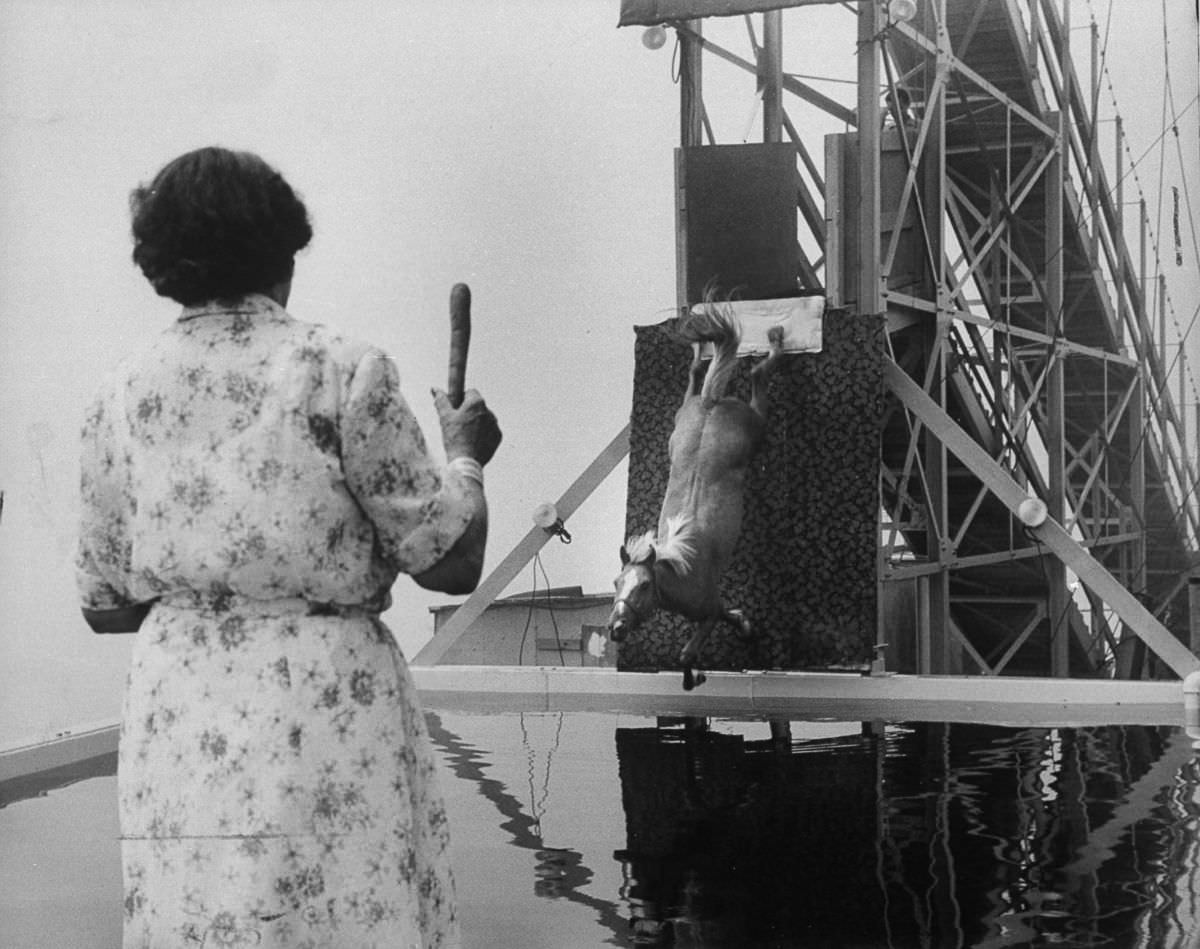
A woman stands at the edge of a pool, arm raised with a carrot held like a small flag of persuasion, while a horse commits to an astonishing drop from a tall platform. The moment is frozen at the most precarious instant—hooves tucked, body tilted downward, mane flaring—before water will swallow the fall in a burst of spray. Behind the action, the skeletal scaffolding of the dive structure looms, emphasizing just how engineered—and how theatrical—this spectacle was.
Horse diving shows occupied a peculiar corner of mid-century entertainment, where animal training, carnival daring, and “sports” publicity overlapped in ways that feel both mesmerizing and unsettling today. The title’s detail about the tempting carrot speaks volumes: the act depended not on brute force but on routine, reward, and the careful choreography between trainer and animal. In 1953, crowds were drawn to stunts that promised danger at a safe distance, and a plunge from height into a pool delivered exactly that thrill.
For readers interested in vintage sports photography and forgotten sideshow history, this image offers more than shock value—it captures an era’s appetite for novelty, risk, and spectacle built on simple incentives. The trainer’s steady stance contrasts with the horse’s suspended motion, turning a split second into a story about trust, performance, and the blurred line between entertainment and hazard. As a historical photo, it’s a vivid entry point into the culture of stunt shows and the complicated legacy of animal-based attractions.