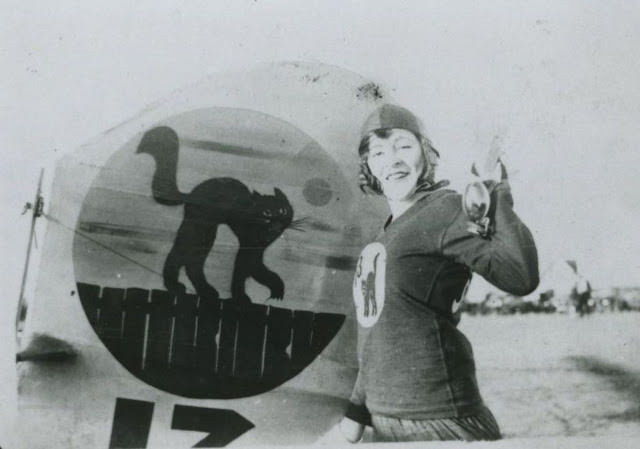
Grinning beside an aircraft marked with a bold black-cat emblem, Gladys Roy strikes a jaunty pose that feels equal parts showmanship and steel nerves. The close framing catches her aviation cap, practical flight clothing, and the easy confidence of someone accustomed to wind, height, and risk. Even on the ground, the scene carries the unmistakable aura of barnstorming-era spectacle.
In the 1920s, stunt flyers and wing walkers turned airfields into theaters, and groups like the “Flying Black Cats” became shorthand for daring aerial entertainment. Roy—remembered as an accomplished parachute jumper and movie stunt actress—belonged to a world where performance and peril were inseparable, and publicity photos had to sell both skill and personality. The cat insignia on the plane hints at the branding that helped these teams draw crowds, turning aviation into a popular sport and a traveling sensation.
For readers searching stories of early aviation, women in flight, and classic stunt work, this photograph offers a vivid doorway into the culture that celebrated fearless performers. It evokes the era’s mix of innovation, celebrity, and calculated danger, when a smile could be part of the act and courage was a marketable craft. As a historical snapshot, it preserves not just a figure from aviation lore, but the atmosphere of a decade that applauded those willing to step out onto the wing.