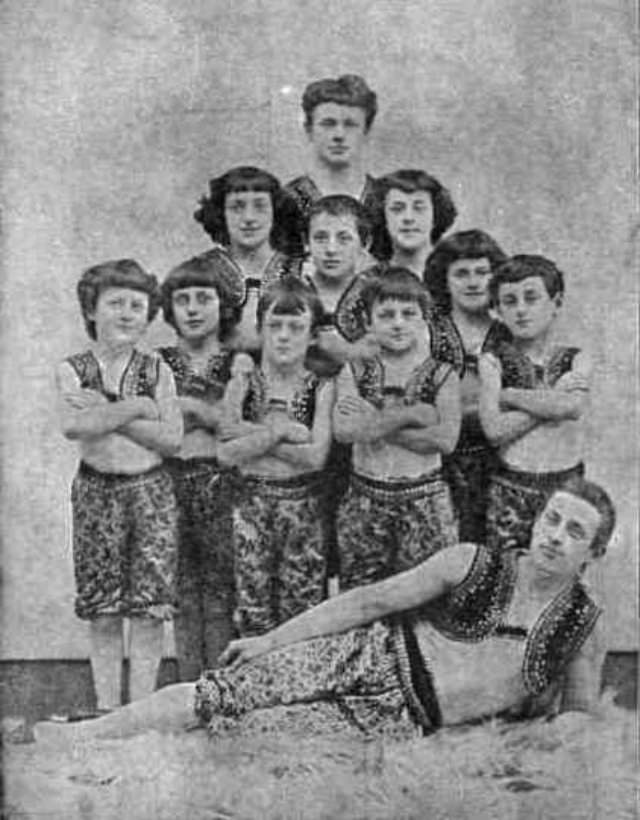
A tight cluster of performers faces the camera with the unmistakable poise of people used to being watched. Matching patterned costumes, crossed arms, and a carefully arranged pyramid of bodies suggest a family troupe presenting itself as a single, disciplined unit, while one figure reclines in front like a confident finale. The studio backdrop is plain, letting posture and costume do the storytelling—an old publicity style common to circus and variety promotion in the late 19th and early 20th centuries.
The title points to the Kremos, a Swiss family whose acrobatics extended across two generations, and the photograph reads like proof of that continuity. Different ages appear within the group, hinting at training passed down at home and polished on the road, where routines depended on trust, timing, and repeated practice. Their expressions are steady rather than playful, underscoring that this was skilled athletic work as much as entertainment.
For readers interested in circus history, European acrobat families, and the evolution of physical performance, this image offers a compact visual record of how such acts marketed themselves: uniform dress, symmetrical arrangement, and a sense of strength held in reserve. It also invites closer looking at details—haircuts, fabrics, and stance—to imagine the stages, posters, and traveling circuits that shaped careers long before modern sports photography. In that way, the Kremos stand not only as a family portrait, but as a snapshot of an era when acrobatics helped define popular spectacle.