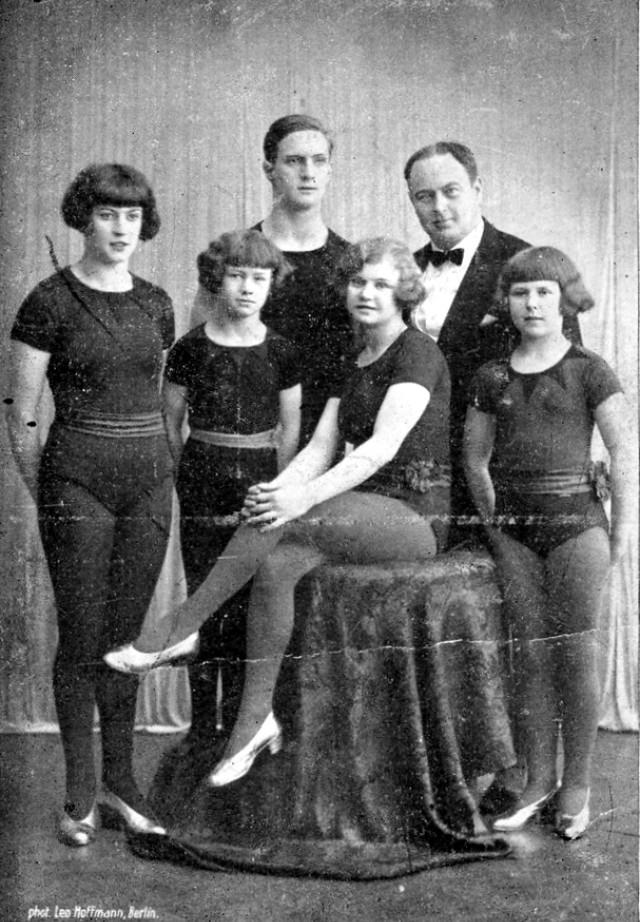
Poised in matching performance outfits, the Kremos gather for a studio portrait that feels half family album, half promotional card. Three young women stand and sit in the foreground with the practical, athletic cut of their costumes clearly visible, while a younger girl and a tall young man frame the group from behind. A formally dressed adult man in a bow tie adds the unmistakable touch of management, patronage, or a ringmaster’s authority—hinting at the organized, professional world behind the smiles and steady gazes.
What stands out is how the photograph balances intimacy with spectacle: the relaxed but disciplined posture, the careful symmetry of the arrangement, and the stage-ready footwear that suggests a life lived under bright lights. Even without seeing the act itself, you can imagine the training required for acrobatics—strength, timing, trust—passed along through daily practice and performance routines. The title’s emphasis on two generations becomes tangible here, with age differences and family resemblance implying continuity in both craft and identity.
For readers interested in circus history, Swiss performers abroad, or the evolution of athletic entertainment in the late 19th and early 20th centuries, this image offers a rare, human-scale entry point. It speaks to an era when acrobat families functioned as traveling companies, blending household and livelihood into one inseparable enterprise. As a piece of visual history, the portrait invites closer attention to costume design, studio presentation, and the way performers chose to be remembered—confident, composed, and ready for the next curtain call.