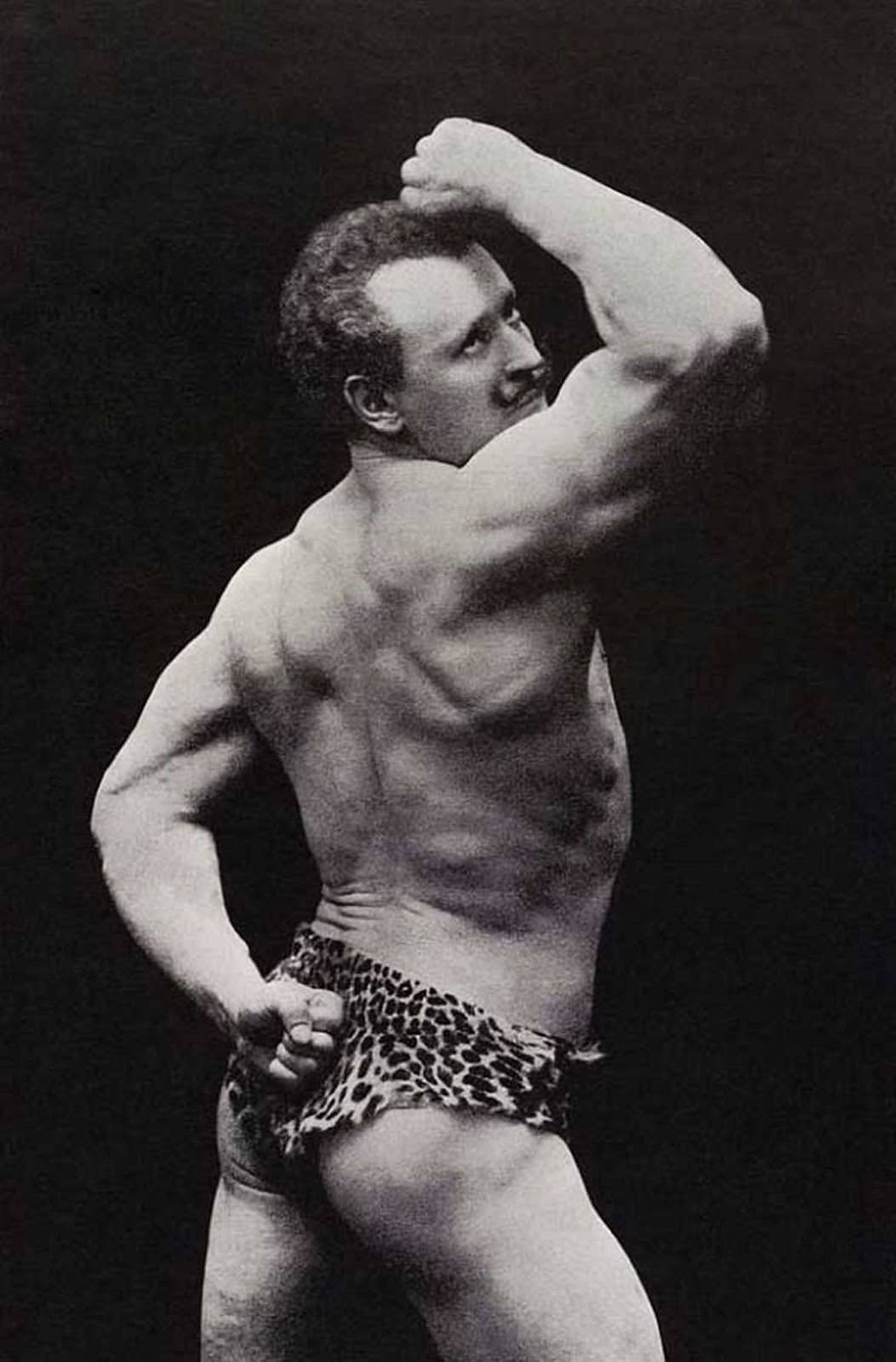
Eugen Sandow is caught mid-pose in 1902, turning his torso while lifting one arm to frame the shoulder and bicep. The dark studio backdrop pushes all attention onto the sculpted lines of his back, chest, and arms, while the leopard-pattern trunks nod to the theatrical flair that often accompanied early strongman performances. Even without props or scenery, the image reads like a deliberate demonstration of proportion and control rather than brute force alone.
Long before bodybuilding became a mainstream sport, Sandow helped popularize the idea that physique could be judged as art as well as athletic achievement. Photographs like this circulated as proof of what disciplined training could produce, feeding a growing culture of physical fitness, posing, and “muscular development” in the early 1900s. The careful lighting and composed stance echo classical statuary, suggesting an era that prized symmetry and presentation alongside strength.
For modern readers searching the roots of bodybuilding history, this 1902 portrait offers a direct link to the visual language that still defines the sport: the flex, the twist, the emphasis on definition, and the confident stage persona. It’s a striking piece of sports heritage and a reminder that fitness photography has long been part documentation, part performance. Whether you collect vintage strongman images or trace the evolution of training culture, Sandow’s pose remains instantly recognizable.