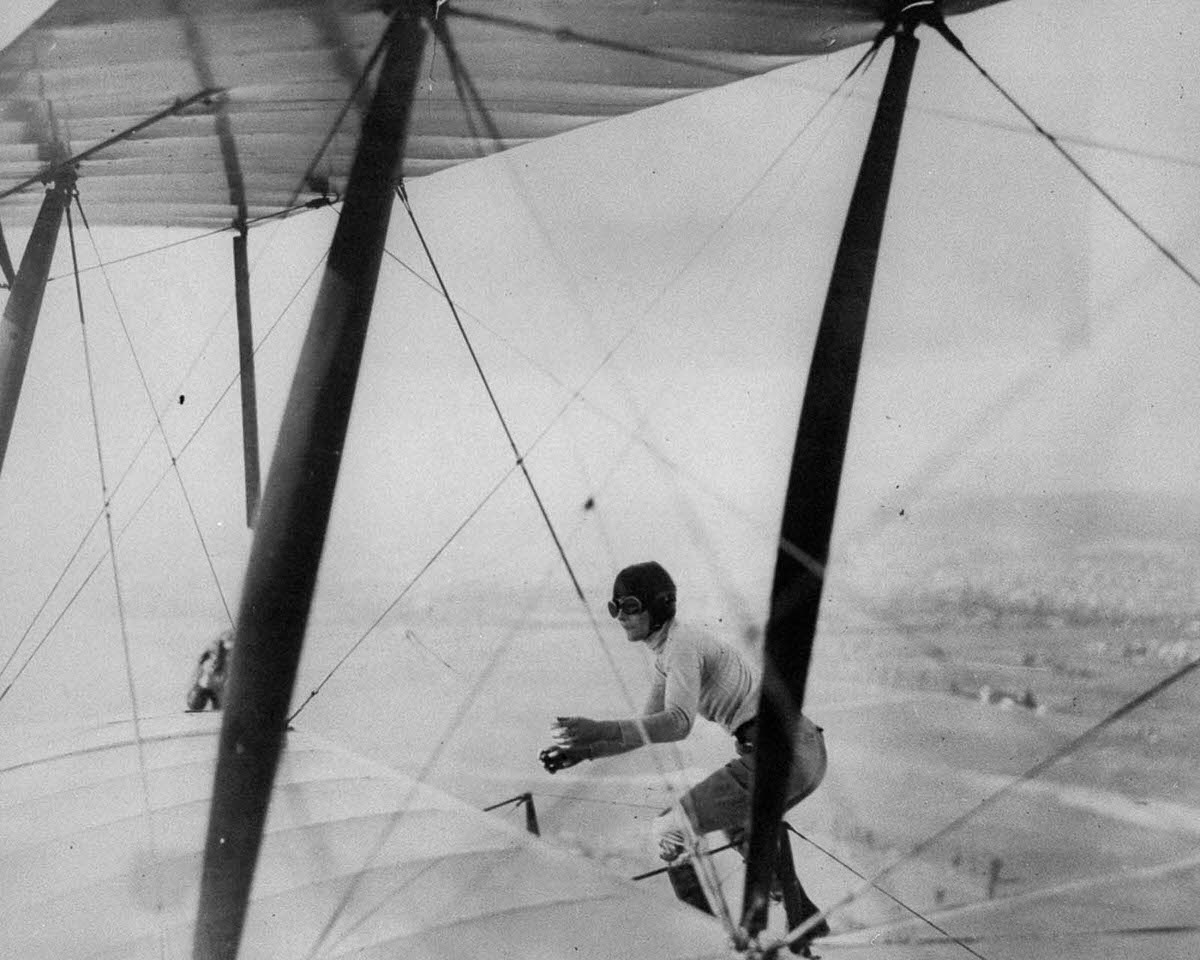
Perched high above the ground on the upper wing of a biplane, Gladys Engle strikes a poised, almost casual stance that belies the danger beneath her feet. The 1926 scene frames her against a pale sky, with struts and tensioned wires crisscrossing like a web around her—aircraft anatomy turned into a stage. Wearing goggles and practical flight clothing, she looks less like a passenger and more like a performer who belongs in the wind.
Wing walking was one of the most thrilling spectacles of early aviation, a time when airshows blurred the line between sport, entertainment, and sheer nerve. The biplane’s exposed framework—so visible in this photograph—reminds us how open and physical flying once was, with little separation between human bodies and the machinery keeping them aloft. Engle’s balance and control echo the era’s appetite for speed and risk, when daredevil stunts helped sell the wonder of flight to crowds on the ground.
Beyond the stunt itself, the image offers a crisp glimpse into 1920s aviation culture: lightweight aircraft, minimalist safety measures, and performers who pushed limits to make headlines. For readers searching for vintage aviation photos, wing walking history, or the story of Gladys Engle, this moment captures the audacity that defined an age of barnstorming and aerial spectacle. It’s a reminder that early flight wasn’t only about getting from place to place—it was also about proving what was possible, one precarious step at a time.