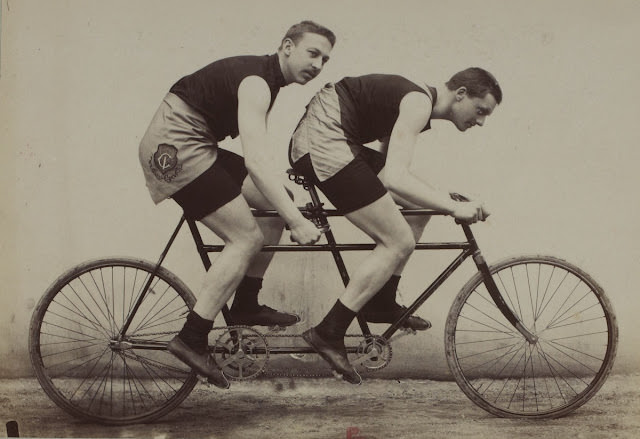
Two riders lean forward in matching athletic kits, sharing a single elongated frame as they brace for speed and synchronization. The tandem bicycle’s long geometry is unmistakable: twin saddles, twin sets of pedals, and a tightly engineered chain system that turns individual effort into a single, coordinated drive. In Jules Beau’s 19th-century sports photography, the studio-like backdrop and crisp pose invite you to study the machine and the athletes as carefully as any race result.
Tandem cycling sport demanded more than strong legs; it required trust, timing, and an almost wordless communication between front and rear rider. The forward cyclist focuses on steering and aerodynamics, while the partner behind matches cadence and power, creating a rhythmic partnership that early spectators would have found both modern and slightly daring. Details like the short trousers, dark socks, and sleeveless tops underline how cycling was shaping its own distinctive sporting identity.
For readers interested in the history of cycling, early bicycle technology, and the rise of competitive sport, this image offers a vivid doorway into an era when speed was becoming a public obsession. Beau’s photograph preserves the disciplined stillness before motion, the moment when a team is poised to translate preparation into performance. It’s a striking reminder that even in the 19th century, tandem racing was already about collaboration, innovation, and the spectacle of human endurance.