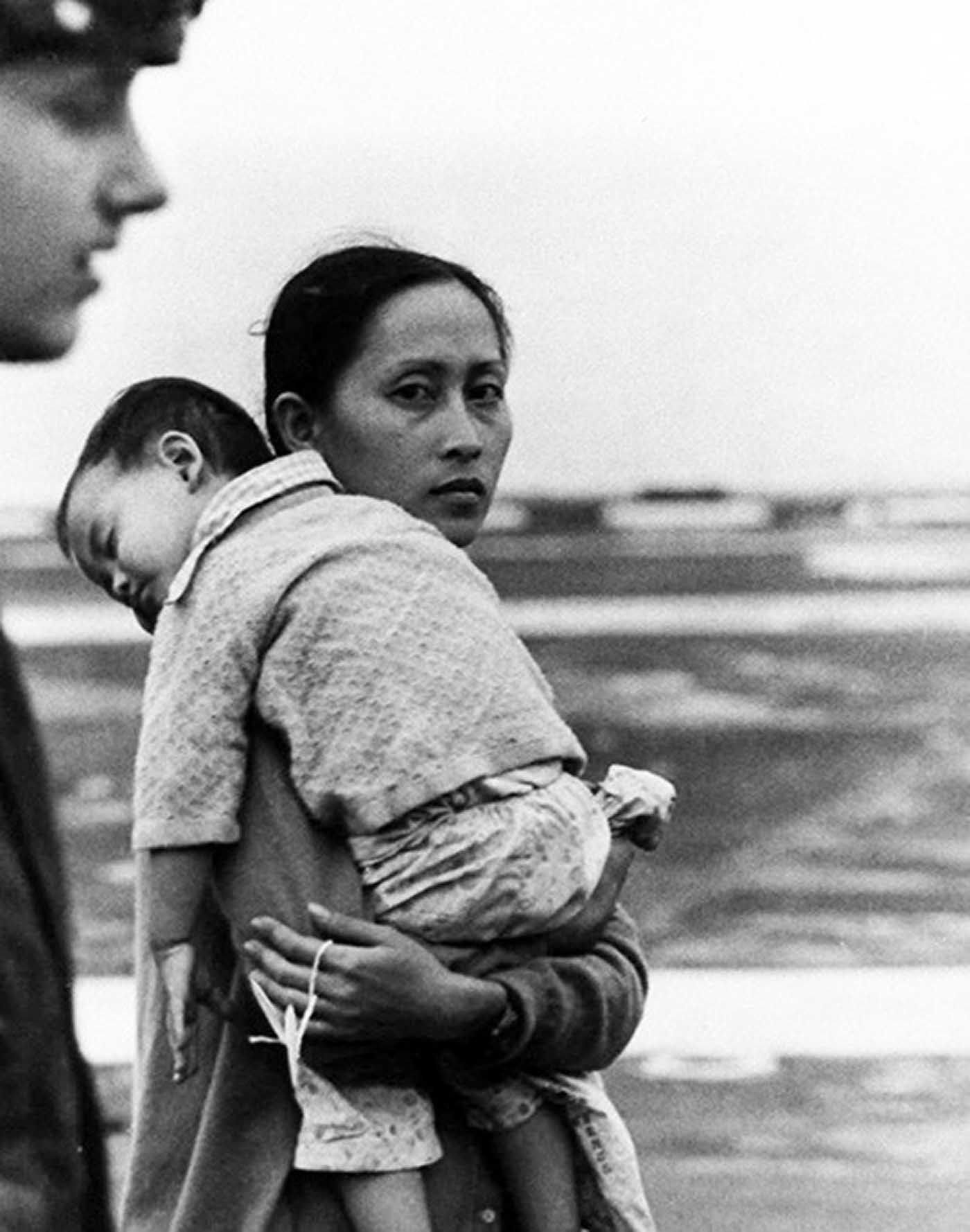
Her gaze meets the camera with a steadiness that feels out of place amid the procedural churn of wartime evacuation. Cradled in her arms, her young son sleeps heavily, limbs slack with exhaustion, while the blurred shapes of uniformed figures and the ship’s open deck suggest motion and noise just outside the frame. The title’s detail—arrival aboard USS Hancock (CV-19) and the issuing of a numbered tag—adds a stark layer of bureaucracy to an intensely intimate moment.
Numbered tags were more than simple labels; they were a way to turn frightened families into trackable evacuees as they moved through checkpoints, manifests, and temporary quarters. In this Vietnam War scene, the carrier’s vast machinery of flight operations and naval discipline becomes an unlikely gateway for civilians seeking safety. The contrast between the mother’s careful grip and the impersonal numbering speaks to the uneasy intersection of humanitarian urgency and military order.
Alongside its historical value, the photograph remains powerful as a human story of displacement and resilience. The USS Hancock (CV-19) looms as both refuge and reminder of the conflict that pushed people toward the sea, and the mother’s expression holds the ambiguity of survival—relief, fear, and uncertainty braided together. For readers searching Vietnam War history, evacuation photos, or the lived experience behind military operations, this image offers a quiet but unforgettable point of entry.