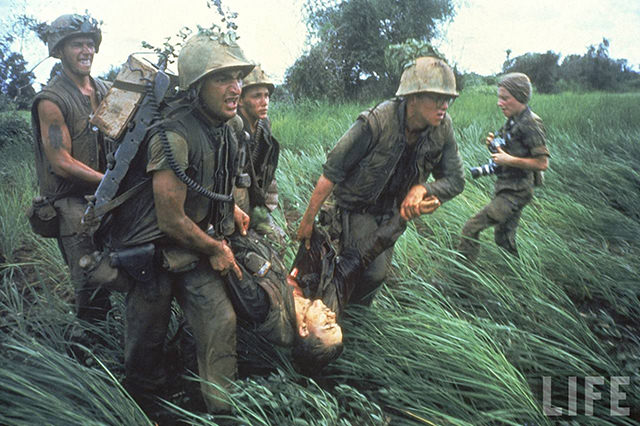
Straining through tall grass near the Demilitarized Zone, U.S. Marines move in a tight cluster with a grim, immediate purpose: bringing a fallen comrade back under fire. The uneven footing and whipping blades of green turn the landscape into a hazard of its own, while helmets, rifles, and radio gear crowd the frame and hint at the urgency of a battlefield extraction. Rather than a distant panorama of the Vietnam War, the scene presses close to the physical weight of loss and the discipline required to keep moving.
At the rear, photojournalist Catherine LeRoy runs alongside the patrol with cameras in hand, a reminder that some of the era’s most enduring records were made at the edge of danger. Her presence inside the action underscores how combat photography could be both witness and participant, documenting not only tactics and terrain but also the human bonds that pull soldiers back for one another. The image’s color detail—muddy uniforms, sweat, and the dense vegetation—adds a visceral realism that black-and-white often softens.
Moments like this help explain why the conflict around the DMZ remains central to discussions of the U.S. military in South Vietnam: it was a war of patrols, sudden contact, and split-second decisions with irreversible consequences. The photograph invites viewers to consider the cost behind terms like “casualty recovery” and “under fire,” translating official language into a raw, lived experience. For readers searching Vietnam War history, Marine combat footage, or Catherine LeRoy’s frontline work, this frame stands as a stark, unforgettable testament to what these words meant on the ground.