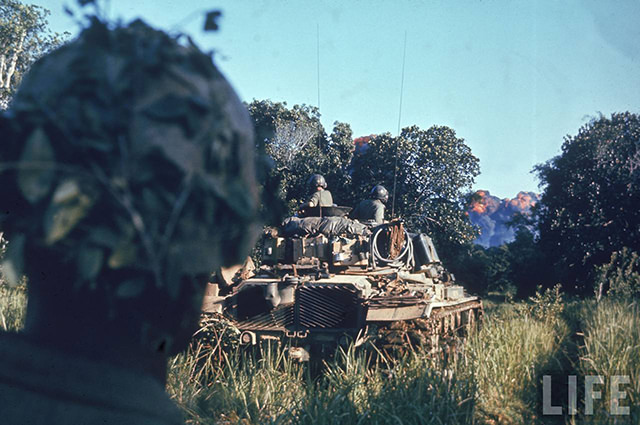
Heat and tension hang over the tall grass as Marines push forward below the DMZ during Operation Prairie, with an armored vehicle edging through the vegetation and into a treeline. A helmeted figure in the foreground, partly out of focus, gives the scene a grounded, on-the-move perspective—like the viewer is walking in step with the patrol rather than observing from a distance. In the background, smoke and orange flame break the line of green, hinting at recent contact or a strike just beyond the next rise.
The title points to 2nd Battalion, 5th Marines conducting a sweep, and the photograph’s details reinforce that methodical purpose: deliberate movement, protective armor close at hand, and eyes scanning ahead. Operation Prairie was part of the Vietnam War’s hard fighting along the northern approaches, where visibility could shift from open fields to dense cover in a few steps. That contrast—sunlit pasture, shadowed trees, and a sudden flare of fire—captures how quickly routine movement could turn into a test of nerve.
For readers searching Vietnam War history, DMZ operations, or U.S. Marine Corps combat patrols, this image offers a vivid snapshot of tactics and terrain rather than a staged moment. The armored track, radio antennas, and packed gear speak to the logistics of surviving and maneuvering in contested ground, while the blurred Marine in front reminds us that war is lived at eye level. It’s a small window into Operation Prairie’s grinding sweeps—measured advances under the constant possibility that the next patch of brush holds danger.