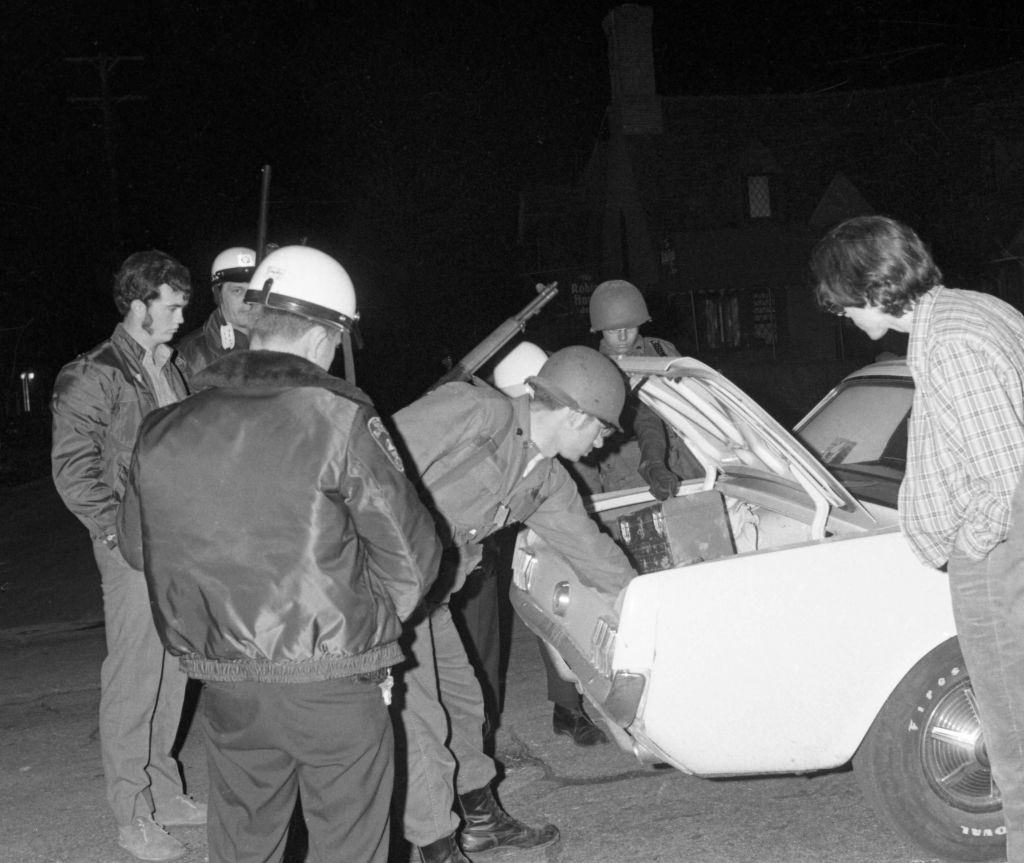
Nighttime tension hangs over Kent State University as uniformed officers and helmeted troops gather around an open trunk, their attention fixed on what might be inside. A student stands close by in a plaid jacket, watching the search with a guarded posture, while others linger in the background, half-lit by harsh streetlight. The ordinary presence of parked cars and campus buildings turns unsettling under the scrutiny of a lockdown.
The title points to a moment when the Vietnam War era’s unrest reached into the most personal corners of student life, making a vehicle search feel like a civic ritual of suspicion. The scene suggests checkpoints, authority, and the uneasy negotiation between campus communities and state power. Even without audible shouting or visible crowds, the body language and clustered uniforms convey a campus on edge.
For readers exploring Kent State history, student protests, and the broader story of American campuses during the Vietnam War, this photograph offers a stark reminder of how quickly normal routines can become regulated. It documents not just enforcement actions but the atmosphere of uncertainty that followed political conflict into dorm lots and late-night streets. The image invites reflection on civil liberties, public safety, and the fraught relationship between dissent and control during a university lockdown.