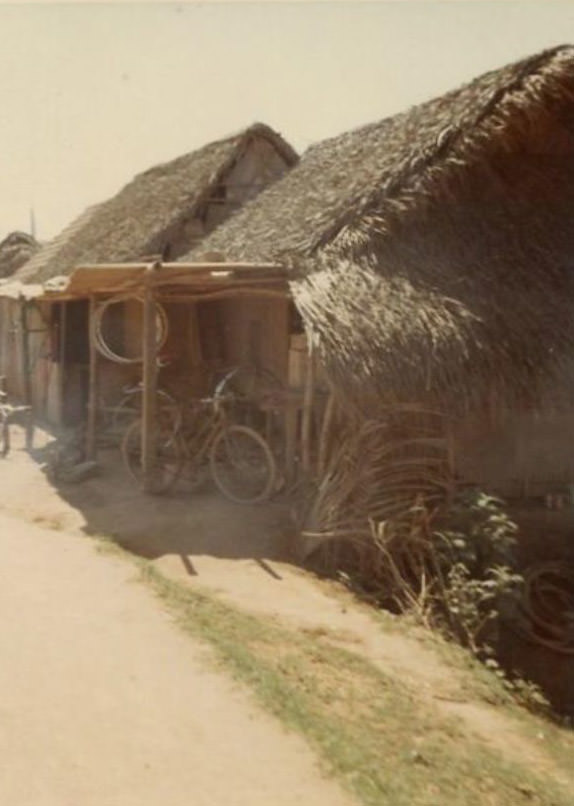
Along a dusty village lane, bamboo-and-thatch houses sit close to the road, their low eaves casting a thin strip of shade over a simple porch. A bicycle leans in the doorway area, and a coil of rope or tubing hangs nearby, small details that hint at daily routines and the practical improvisation of rural life. The roofs, thick with dried palm or grass, show the kind of vernacular building knowledge shaped by heat, rain, and available materials.
Scenes like this are often overshadowed by the headline events of the Vietnam War, yet they reveal the lived landscape where most people worked, traveled, and raised families. The architecture is lightweight but resilient, built to be repaired quickly and to breathe in a humid climate, with open walls and overhangs that blur the line between indoors and outdoors. Even without an identified village name, the texture of bamboo, the sun-bleached road, and the quiet frontage evoke the rhythms of South Vietnamese countryside settlements.
For historians and photo collectors, the value here lies in the ordinary: a roadside home, a place to park a bike, a shaded threshold where neighbors might pause to talk. It’s an evocative reference for anyone researching traditional Vietnamese housing, rural infrastructure, and everyday life during the wartime era in South Vietnam. As an archival image, it invites careful looking—at construction methods, household objects, and the way a village street becomes both a workspace and a social space.