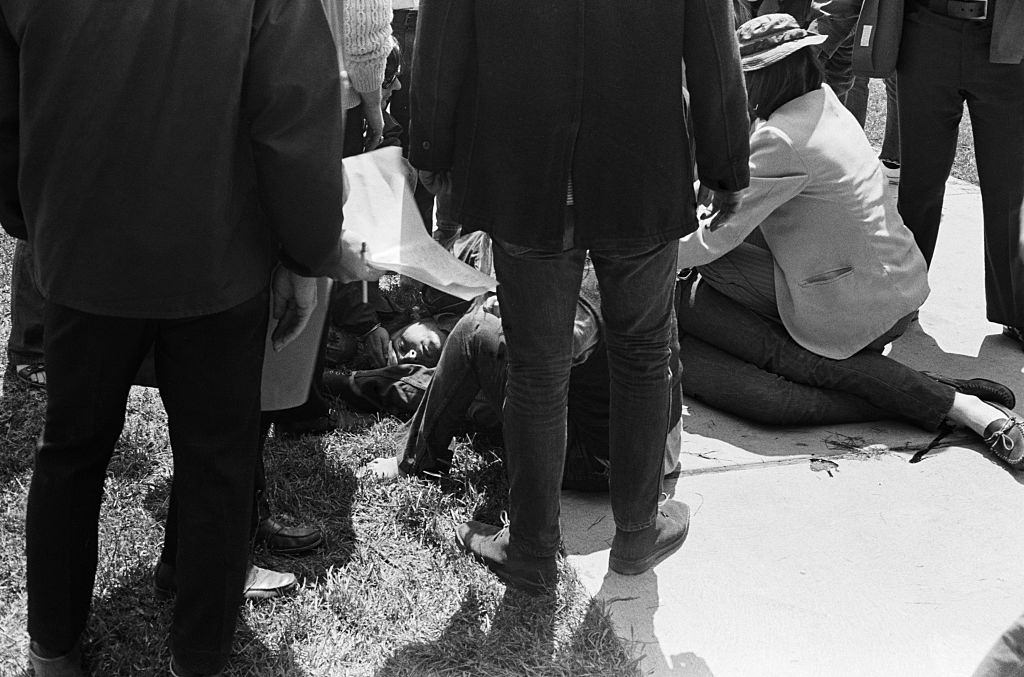
Bodies crowd the edge of a campus sidewalk as a wounded Kent State University student lies on the grass, dazed and motionless. Fellow students kneel close, using coats and hands as improvised shelter while others stand in a tight ring, half-blocking the view as if instinctively trying to hold panic at bay. The stark contrast of bright pavement and shadowed figures emphasizes how suddenly ordinary student life gave way to emergency.
On May 4, 1970—at the height of Vietnam War-era unrest—the title’s stark wording points to the moment after National Guardsmen fired, when shock turned into frantic aid. No banners or speeches dominate this frame; instead, the story is written in posture and proximity: a kneeling helper braced beside the injured student, onlookers frozen mid-step, and a small patch of grass transformed into a makeshift triage area. The scene reads like a pause between violence and understanding, when the only clear action is care.
Memory of Kent State endures because images like this compress a national crisis into a single, intimate human tableau. For readers searching for Kent State May 4, 1970, National Guard shootings, or Vietnam War protest history, the photograph offers more than documentation—it shows how quickly political conflict can spill into personal tragedy. In the quiet urgency of classmates tending to one of their own, the long shadow of that day becomes unmistakable.