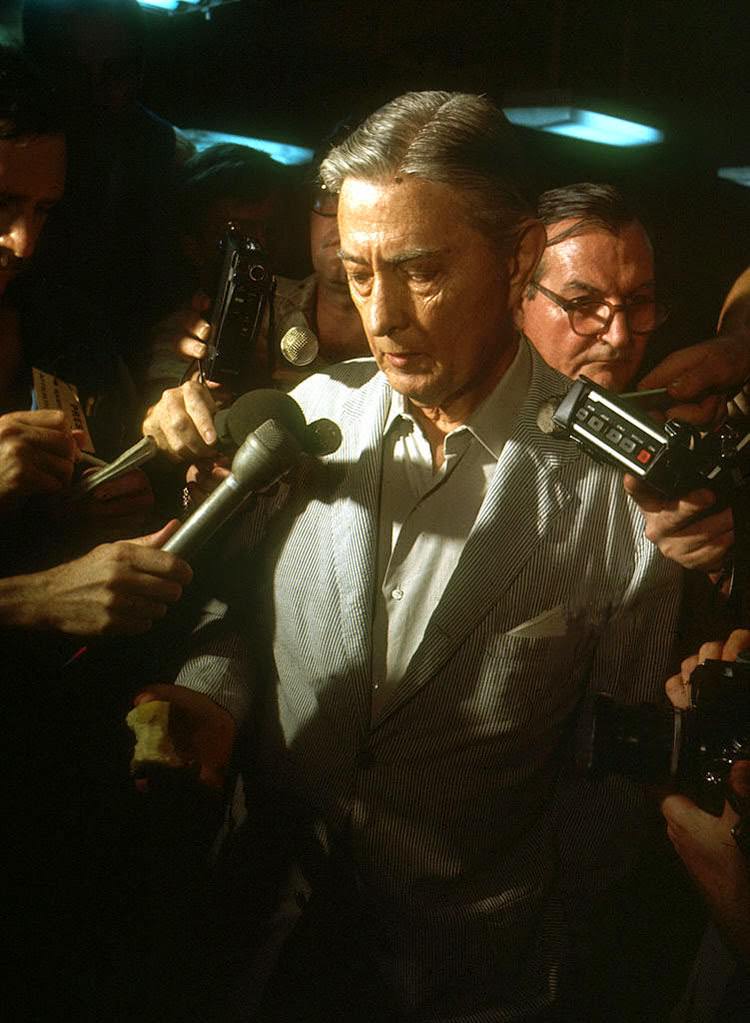
Pressed in by microphones and handheld recorders, U.S. Ambassador to Vietnam Graham Martin appears in a tight circle of reporters on April 29, 1975, just as Saigon was collapsing and evacuation efforts dominated every conversation. The color photograph is claustrophobic and intimate: harsh overhead light, faces half-shadowed, and the ambassador’s downcast focus suggesting the weight of decisions being translated into a few careful sentences for the world’s cameras. It’s a moment where diplomacy becomes public theater, and the press scrum itself tells part of the story.
Behind the crowded frame lies the larger turning point of the Vietnam War—the final hours of South Vietnam and the approach of North Vietnamese victory. The image captures the uneasy intersection of official statements and human emotion, when policy met panic and the mechanics of withdrawal became headline history. Even without a wide view of the street outside, the sense of urgency is unmistakable, conveyed through the proximity of hands, lenses, and listening faces.
For readers searching for Vietnam War history, the fall of Saigon, or the U.S. evacuation from South Vietnam, this photograph offers a vivid, ground-level perspective on how the end of a conflict is communicated. It reminds us that the closing chapter was not only written in military movements and political communiqués, but also in crowded rooms where words mattered and time ran short. As an archival snapshot, it preserves the texture of that day—its tension, its scrutiny, and its irreversible finality.