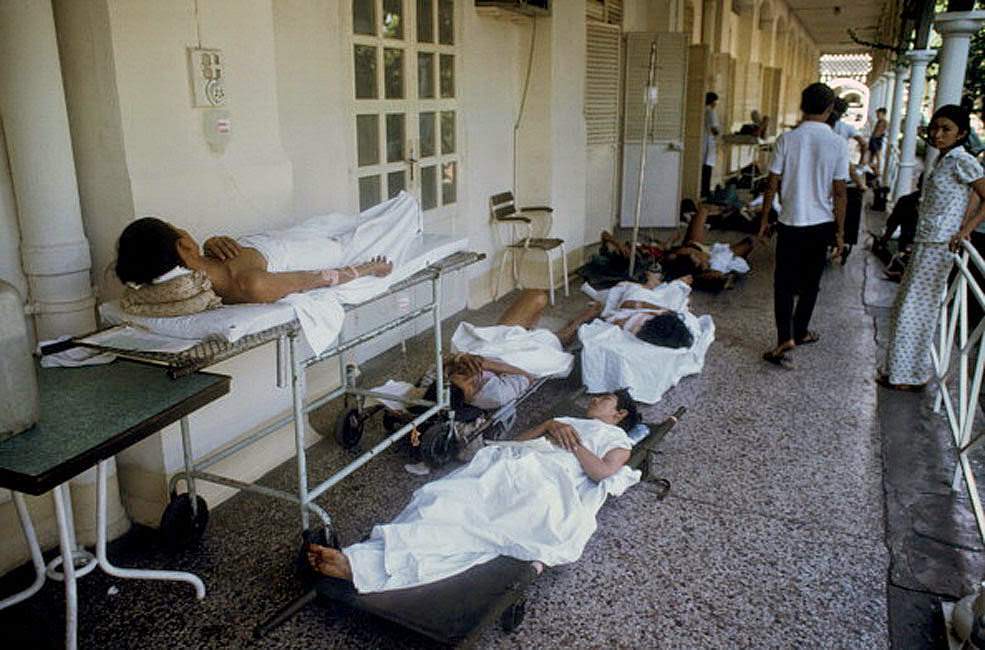
Along the shaded corridor of Hospital Grall, stretchers line the floor and a wheeled gurney is pressed into service as an improvised bed, turning a passageway into an emergency ward. Civilians lie beneath white sheets, some bandaged, some simply waiting, while the pale walls, shuttered windows, and columns frame a scene of overcrowding and urgency. The everyday architecture of a hospital walkway becomes part of the story, emphasizing how quickly routine spaces can be swallowed by crisis.
In the background, staff and bystanders move through the narrow lane, stepping carefully around bodies and equipment as if navigating a new, grim geography. The mix of stillness and motion—patients forced to rest, others standing watch—suggests triage under pressure, when care is delivered wherever there is room to place a person. Small details, like the sparse furniture and the close-packed stretchers, underscore the strain that the Vietnam War placed on medical facilities and on civilians caught in its violence.
Hospital Grall’s corridor scene reminds viewers that wartime history is not only written at the front lines but also in hospitals where injuries arrive faster than resources. For readers searching Vietnam War civilian casualties, wartime hospitals, and historical medical photography, this image offers a stark, human-centered record of survival and vulnerability. It asks us to look beyond strategy and politics toward the quieter, relentless aftermath—waiting, tending, and enduring.