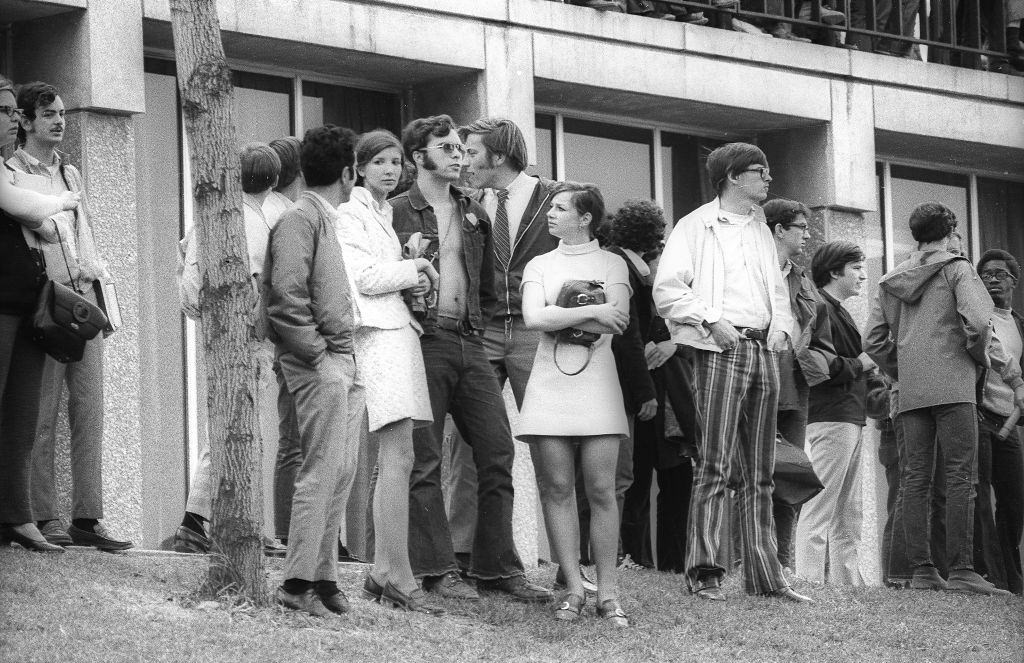
Along the edge of Blanket Hill, a mixed crowd clusters on a grassy slope beside a stark campus building, their attention pulled in several directions at once. Faces turn outward as if listening for speeches or reacting to movement beyond the frame, while others talk in tight pairs, hands in pockets, arms folded, bodies leaning into conversation. The everyday details—jackets, short skirts, flared trousers, and shoulder bags—anchor the scene in the lived reality of a student gathering rather than an abstract political moment.
The title’s date, May 4th 1970, carries heavy resonance in the history of Vietnam War protest and campus activism, and that weight seems to hang in the air here. Nothing in the photograph needs dramatizing: the tension is quiet, built from watchful stares, guarded postures, and the way people stand close together as if for reassurance. It’s a snapshot of a community caught between ordinary routine and the urgency of dissent.
For readers searching the era, this image works as a vivid entry point into antiwar demonstration history and the culture of American campuses during the Vietnam War. The scene around Blanket Hill suggests the mechanics of protest—gathering, waiting, listening, debating—before and after the moments that make headlines. As a historical photo for a WordPress post, it invites reflection on how movements are made up of individuals, each carrying their own fear, anger, solidarity, and resolve.