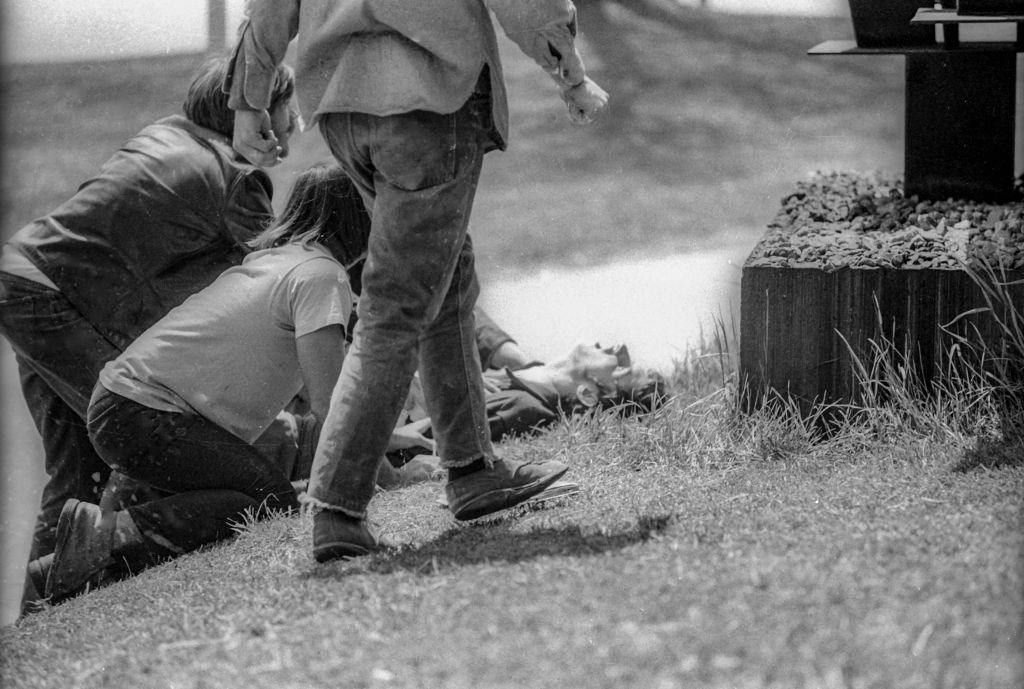
Kneeling in the grass, several students cluster around their wounded classmate, John Cleary, as the calm of an ordinary campus lawn collapses into crisis. A low angle brings the viewer close to the ground, where denim, jackets, and bent shoulders frame a pale face turned upward, eyes fixed and mouth slightly open. The scene feels both intimate and chaotic—someone leans in to help while another figure strides through the foreground, suggesting movement, confusion, and urgency in the seconds after gunfire.
May 4, 1970, in Kent, Ohio, remains one of the defining moments of the Vietnam War era at home, when antiwar protest met deadly force from the Ohio National Guard. The photograph does not rely on distant crowds or banners to make its point; instead, it centers the human cost of political conflict, caught in the raw immediacy of students trying to aid one of their own. That tension—between civic dissent and state power—hangs over every detail, from the hurried posture of helpers to the stark openness of the lawn.
For readers searching the history of the Kent State shootings, student protests, or the broader anti–Vietnam War movement, this image offers a direct entry into the lived reality behind the headlines. Its power lies in what it refuses to aestheticize: fear, shock, and a kind of stunned solidarity enacted on the ground. As a historical photo, it also reminds us how a single campus moment can ripple outward, shaping national memory, public debate, and the way Americans reckon with war and protest.