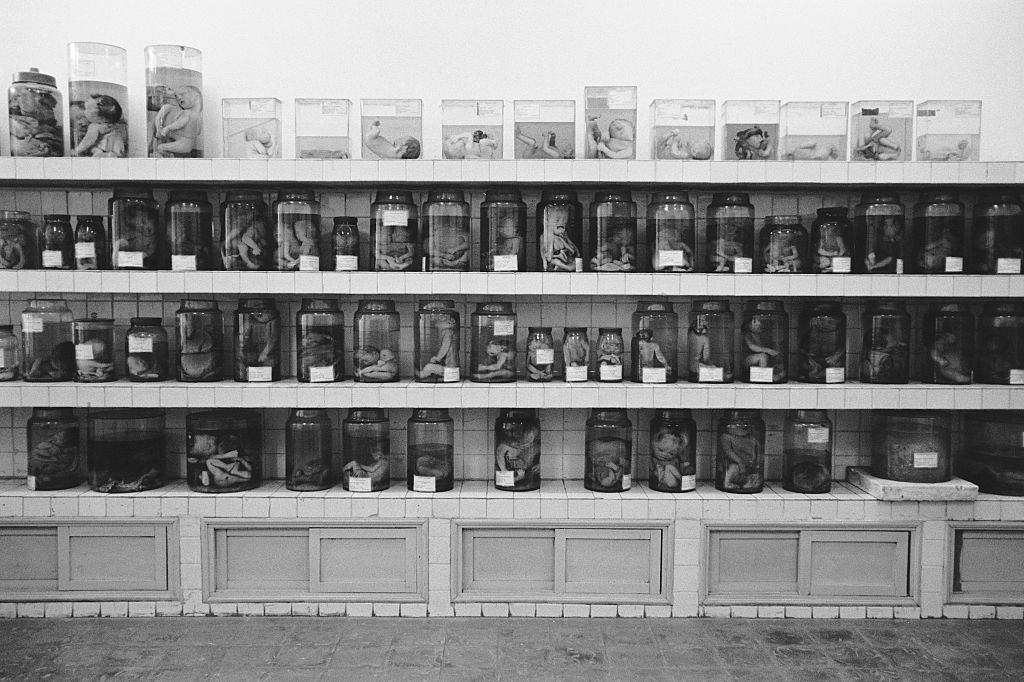
Rows of glass jars line tiled shelves at Tu Du Hospital in Ho Chi Minh City, each container holding preserved fetal remains and marked with small labels. The stark order of the display—large jars and smaller bottles arranged in bands from top to bottom—creates a clinical museum-like wall that is hard to look at and harder to forget. Seen as a whole, the photograph turns a medical collection into a visual ledger of loss.
Agent Orange, the wartime herbicide referenced in the title, haunts the scene as an explanation offered alongside the specimens rather than something visible in the room. The Vietnam War’s chemical legacy is often discussed in abstractions—spraying campaigns, contamination, long-term exposure—yet here those terms are pulled into a concrete, physical reality. In this setting, the hospital becomes both caretaker and witness, preserving evidence that speaks to intergenerational harm.
For readers searching the history of Agent Orange in Vietnam, this 2005 image provides an unvarnished look at how memory and medicine intersect long after the fighting ends. The tiled walls, the uniform shelving, and the careful cataloging suggest documentation as much as display, inviting questions about public health, accountability, and the ethics of showing such remains. It is a sobering reminder that the aftermath of war can persist not only in landscapes, but in bodies—and in the institutions tasked with recording what happened.