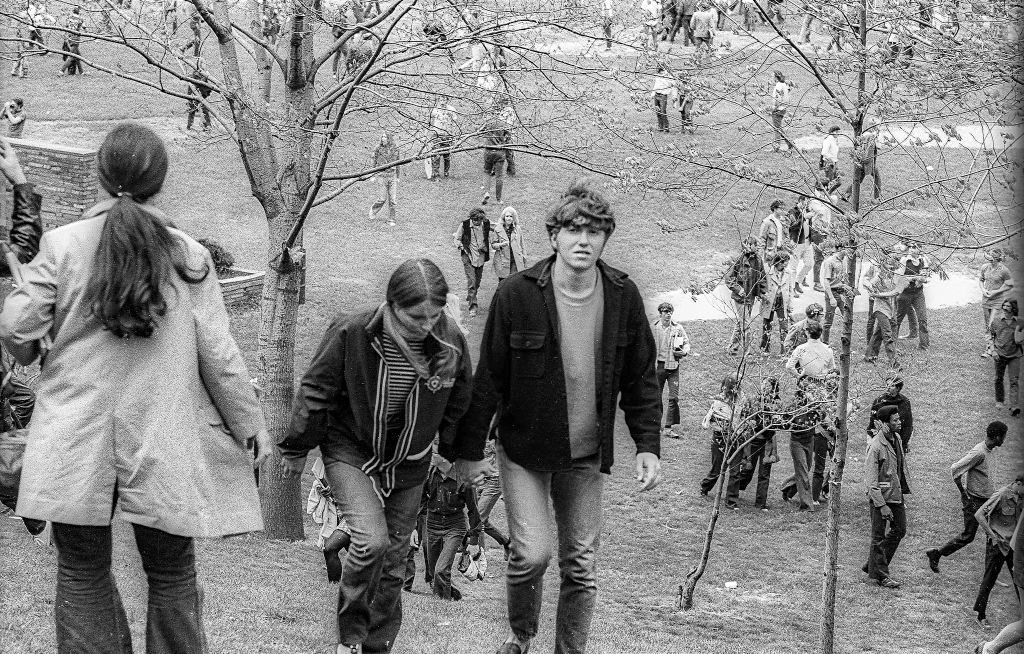
Across a sloping campus lawn in Kent, Ohio, students move in uneven streams after gunfire shattered an antiwar demonstration on May 4, 1970. In the foreground, two young people climb uphill with grim focus while others scatter behind them, some looking back as if trying to understand what just happened. Bare tree branches cut through the frame, emphasizing the exposed, public nature of the moment and the sudden collapse of ordinary student life into confusion and flight.
The photograph’s power lies in its everyday details—jackets, jeans, hurried strides—set against a scene no longer governed by routine. Small clusters form and dissolve as individuals decide whether to run, help, or simply get away, and the open space between them feels charged with fear and disbelief. Rather than a single dramatic focal point, the camera holds a wider view, letting the dispersal itself tell the story of a protest turned into a crisis.
Remembered as the Kent State shootings, this episode became a turning point in public debate over the Vietnam War, campus protest, and the use of force against civilians. Images like this one circulated widely, shaping how Americans understood the costs of political conflict at home as well as abroad. For readers searching the history of the antiwar movement, student activism, and 1970s America, the scene stands as a stark visual record of a day that changed the national conversation.