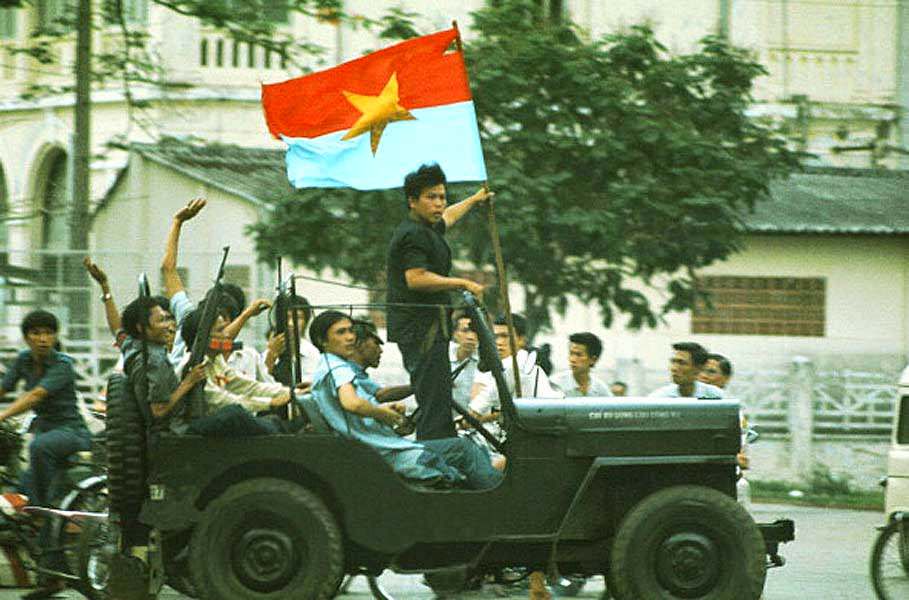
A Willis jeep rolls through Saigon with a cluster of armed men riding exposed in the open, their gestures animated as they move past blurred buildings and roadside trees. One figure stands upright, gripping a flagpole as the tricolor banner with a prominent star snaps above the vehicle, turning the passing street into a moving stage. The hurried motion, crowded seating, and improvised posture suggest an urgent message being carried block to block rather than a routine patrol.
In the title’s framing, these onboard riders are identified as elements of the GRP (Provisional Revolutionary Government) from South Vietnam, traversing the city to announce the arrival of North Vietnamese tanks. That announcement—part proclamation, part psychological shockwave—evokes the final, decisive moments of the Vietnam War when control of the capital was shifting in real time. The jeep, a familiar wartime machine, becomes here a loudspeaker on wheels, translating battlefield developments into immediate urban reality.
Details in the scene sharpen the atmosphere of upheaval: rifles held upright, faces turned outward to the street, and bystanders in the background tracking the convoy’s movement with cautious attention. For readers searching for Vietnam War history, Saigon’s last days, or GRP imagery, the photograph offers a vivid, street-level view of how political change was performed and perceived in public space. It preserves the tense intersection of symbolism and speed—flag, vehicle, and message—at the moment news itself was driving through the city.