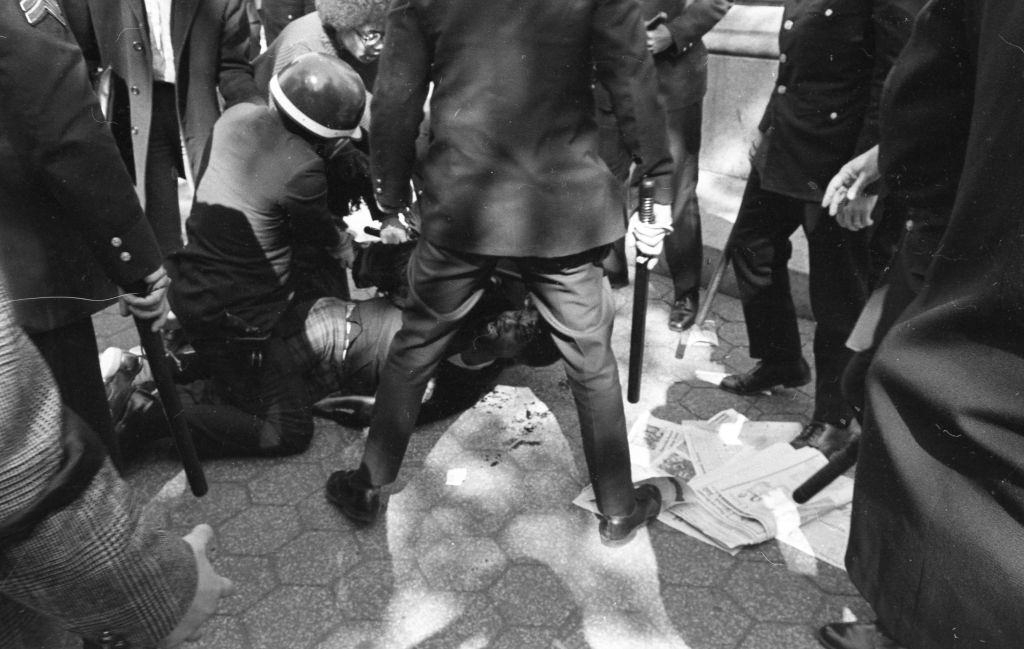
A tight ring of uniformed police closes in on a lone protester on a New York City sidewalk, batons gripped low as the arrest unfolds at street level. The scene is crowded and urgent—helmets, dark coats, and tense postures pressing inward—while onlookers hover at the edges, half-seen and uncertain where to stand. Even without faces clearly framed, the imbalance of power is unmistakable, captured in a single, claustrophobic moment.
Scattered newspapers underfoot add a striking detail, their crumpled pages turned into a literal floor for authority to stand on during a Vietnam War protest. The printed headlines and photographs—meant to inform, persuade, or inflame—become debris in the struggle, suggesting how quickly public debate can spill from paper into the streets. In the churn of bodies and boots, the ordinary materials of civic life are reduced to scraps, while the instruments of policing remain rigid and visible.
Dated May 7, 1970, the photograph resonates with the broader history of Vietnam War demonstrations, when anger, grief, and political urgency collided with efforts to control crowds in America’s largest cities. It’s an image that invites close reading: the posture of restraint versus force, the compressed space, the watching crowd, and the uneasy blend of protest and crackdown. For readers searching the history of Vietnam War protests in New York City, this frame offers a stark, immediate record of conflict over dissent in the public square.