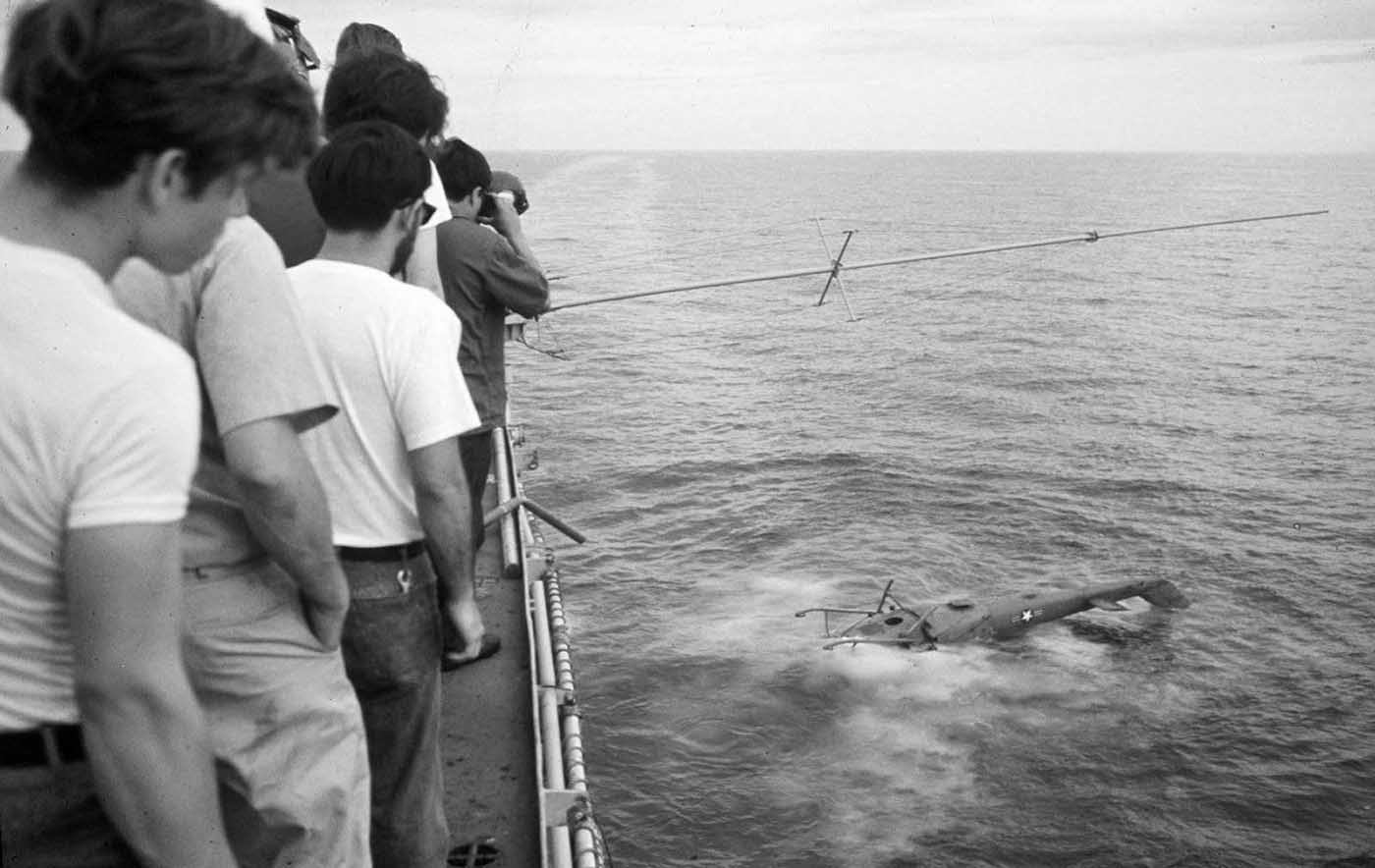
Along the ship’s rail, a line of sailors leans out over open water, watching a helicopter settle into the sea just off the hull. The rotor and tail boom still break the surface, and a pale churn of foam spreads outward as the aircraft begins to sink. No combat is visible here—only the hard, silent geometry of steel deck, horizon, and a machine being surrendered to the ocean.
The title points to one of the most dramatic decisions made during the Vietnam War evacuation of 1975: clearing precious flight-deck space by pushing helicopters overboard so more evacuees could be brought aboard. In that frantic rhythm of arrivals, landings, and quick turnarounds, an aircraft could become less valuable than the next group of people waiting for a safe place to stand. The men watching from the edge seem caught between routine seamanship and the unease of witnessing an expensive lifeline deliberately discarded.
As a piece of Vietnam War history, the photograph distills the evacuation into a single, unforgettable moment—human urgency measured against machinery and limits. It also speaks to the improvisation at sea, where every square foot of deck mattered and choices were made in minutes rather than in meetings. For readers searching for “helicopters pushed overboard,” “1975 Vietnam evacuation,” or “U.S. Navy flight deck scenes,” this image remains a stark reminder of how the war’s final chapter looked from the side of a ship.