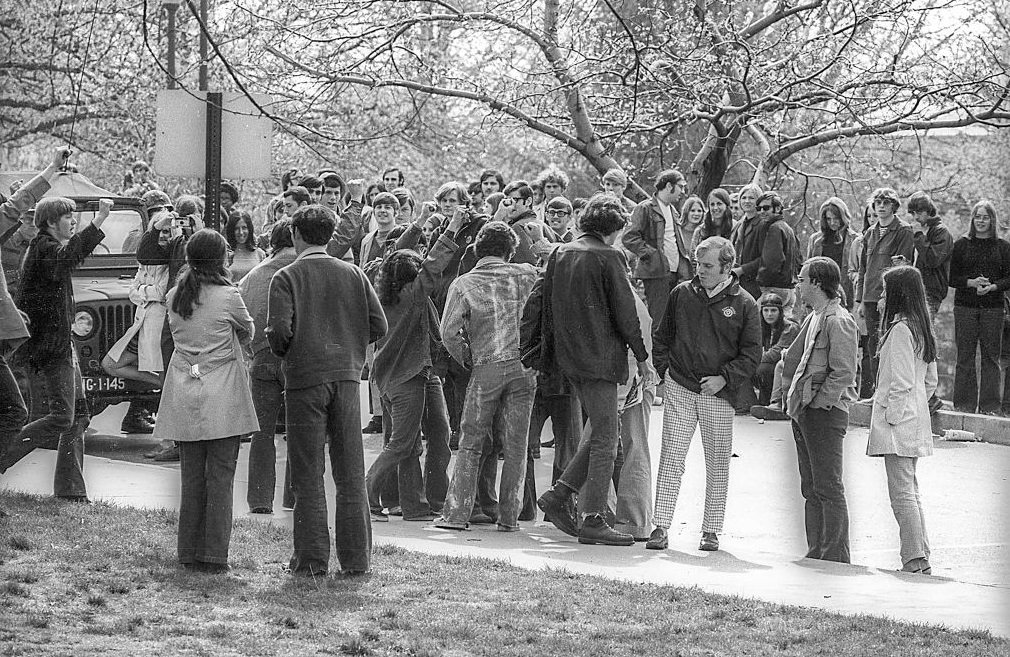
A campus road in Kent, Ohio becomes a crowded stage as Kent State University students cluster in small knots, turning toward one another in urgent conversation. Several arms rise above the group—some in clenched-fist gestures—while others hold cameras or simply watch, faces intent. Parked vehicles and a jumble of spring tree branches frame the scene, grounding the moment in the everyday surroundings of a university suddenly transformed by the Vietnam War era.
On May 3, 1970, the day referenced in the title, the gathering reads as a tense pause between movement and consequence, with students standing, leaning, and circling as if weighing what comes next. Clothing and hairstyles signal the period, yet the emotions feel immediate: resolve, uncertainty, and solidarity moving through a crowd that is not uniform, but connected by shared attention. The raised fists punctuate the photo like visual headlines, echoing the language of protest that defined student antiwar activism across the United States.
For readers searching the history of Kent State, student protests, and the wider antiwar movement, this image offers a close look at how dissent looked on the ground—messy, human, and collective. Rather than a single dramatic focal point, the photograph emphasizes a community in motion, where spectators and participants blur together along the roadway. It’s an evocative snapshot of American campus unrest at the height of Vietnam War protests, capturing the atmosphere that made 1970 a turning point in public life and student activism.