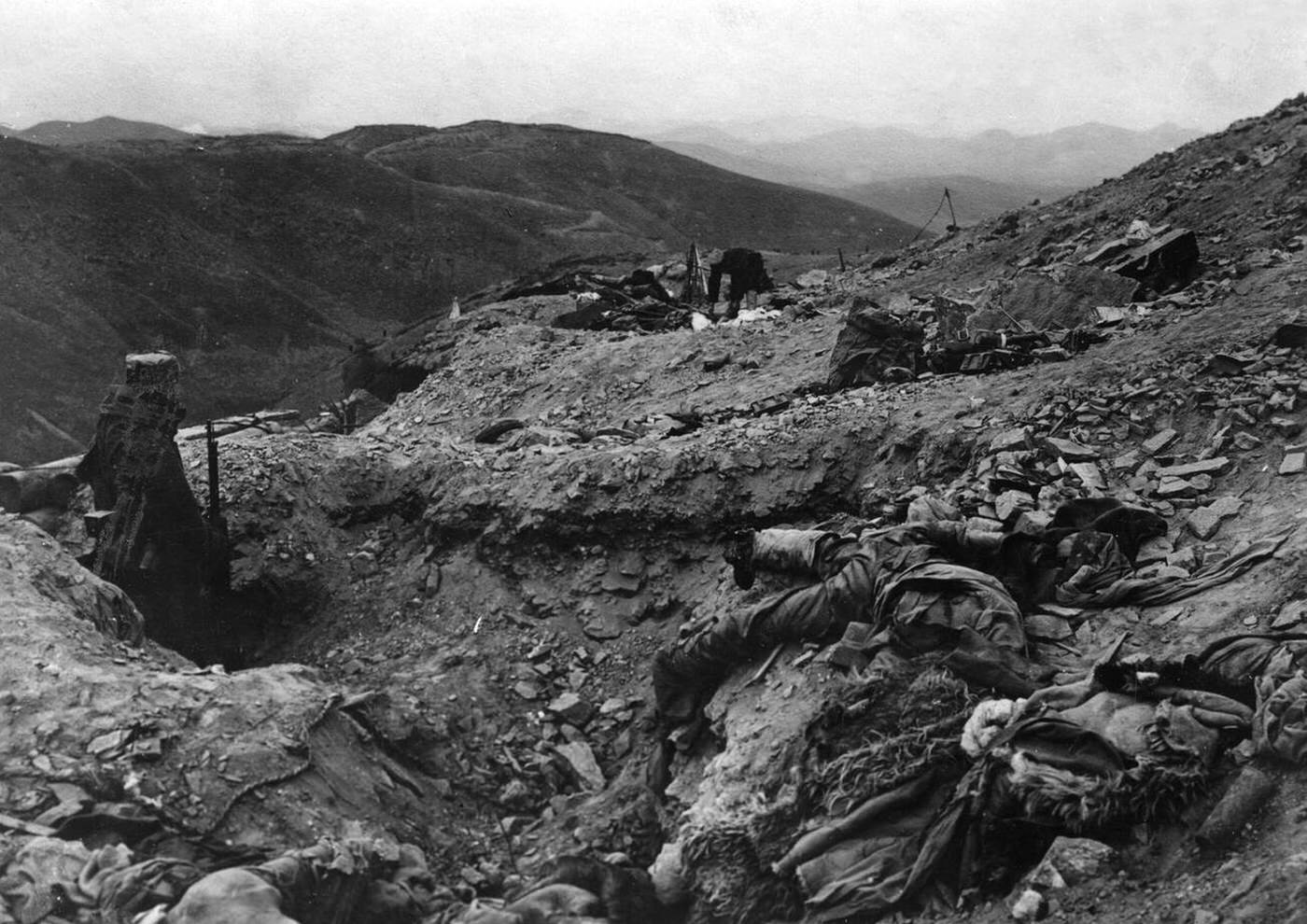
Across a barren ridgeline, the ground is torn open by trenches and craters, with scattered debris and fallen figures lying where the fighting ended. The camera looks out over layered hills and a pale sky, a stark backdrop that makes the foreground’s jagged earthworks feel even more unforgiving. Nothing here is ceremonious—just the raw geometry of a battlefield shaped by shells, gravity, and haste.
In the context of the Russo-Japanese War of the 1900s, scenes like this speak to the era’s changing character of warfare: fortified positions, relentless artillery, and the grim work of holding high ground. The broken timbers and rough revetments suggest improvised defenses, while the uneven trench lines hint at desperate attempts to survive and return fire. It’s a wartime landscape where distance offers no comfort, only a wider view of how far destruction spreads.
For readers exploring early 20th-century military history, this historical photo provides a sobering window into the conflict’s human cost and the environment soldiers endured. The absence of banners, commanders, or clear landmarks keeps the focus on what remains after an engagement—earth churned into rubble and silence stretching into the mountains. As an archival image tied to the Russo-Japanese War, it also reminds us how photography carried the realities of modern war beyond the front and into public memory.