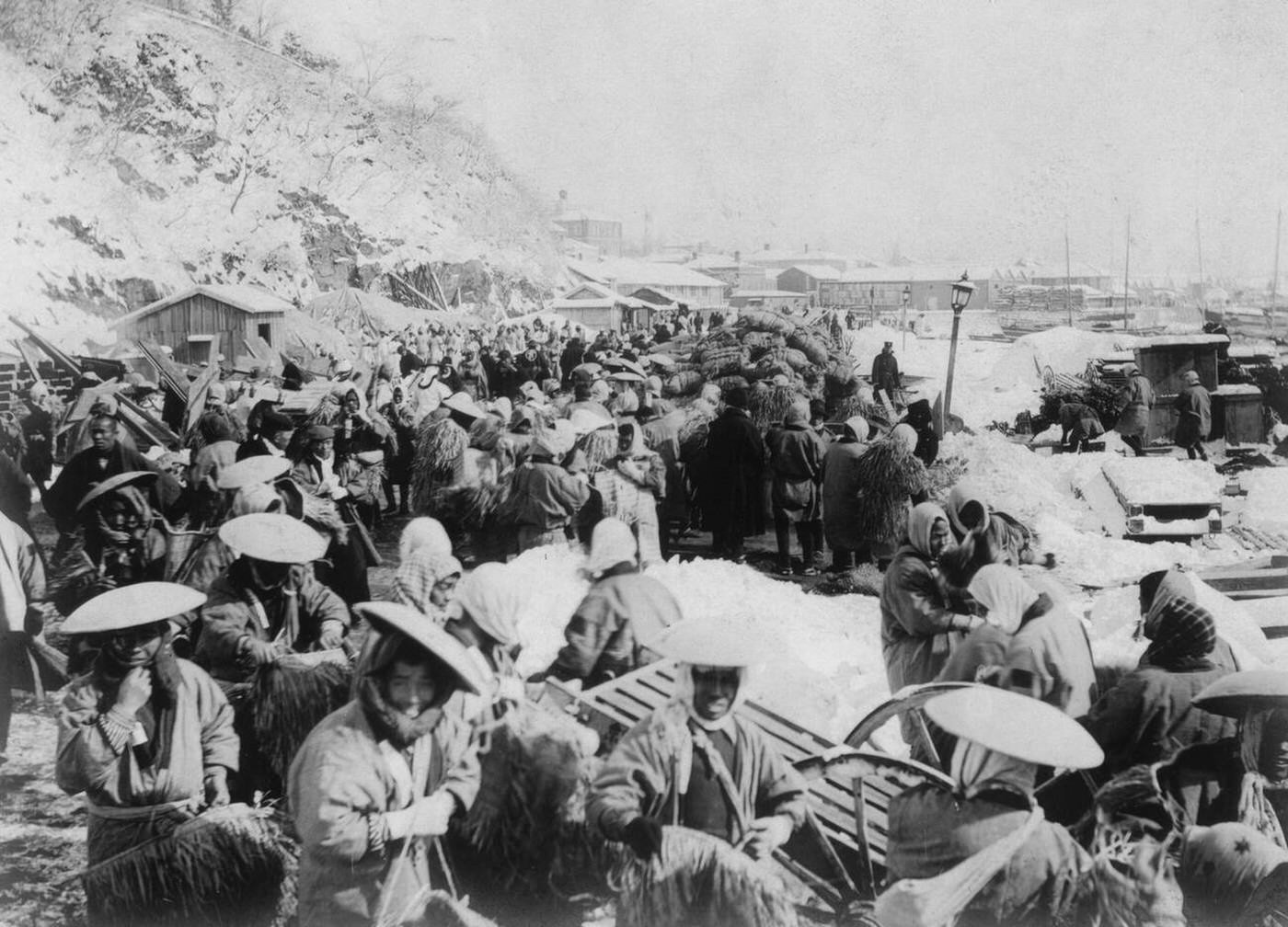
Crowded along the wharf at Chemulpo, bundled figures move through snow and slush with the practiced urgency of a working waterfront under wartime pressure. The title identifies them as Japanese and Korean coolies, and the scene supports that reading: shoulder poles, laden bundles, and hand-carried loads pass from the dockside into growing stacks of supplies. Behind the press of bodies, low sheds and temporary-looking structures line the shore, suggesting a port reshaped to serve military logistics during the Russo-Japanese War of 1904.
Winter dominates the frame as much as labor does, whitening roofs and the hillside while smoke or haze blurs the distance over the harbor. Straw hats and heavy coats appear in the foreground, where men hunch against the cold while gripping ropes and parcels; nearby, neat piles of sacks rise like miniature embankments. A single lamppost and scattered carts hint at the infrastructure of modern transport, yet the work itself remains intensely manual—human muscles bridging the gap between ship, wharf, and depot.
Ports like Chemulpo were strategic hinges in the Russo-Japanese War, and photographs like this remind us that campaigns depended on more than soldiers and ships. The movement of food, fuel, and equipment required a vast, often uncredited workforce operating at the water’s edge, day after day, in punishing conditions. For readers exploring Korean history, Japanese imperial expansion, and early 20th-century military supply chains, this image offers a stark, human-scale view of how war reorganized everyday labor on the Korean coast.