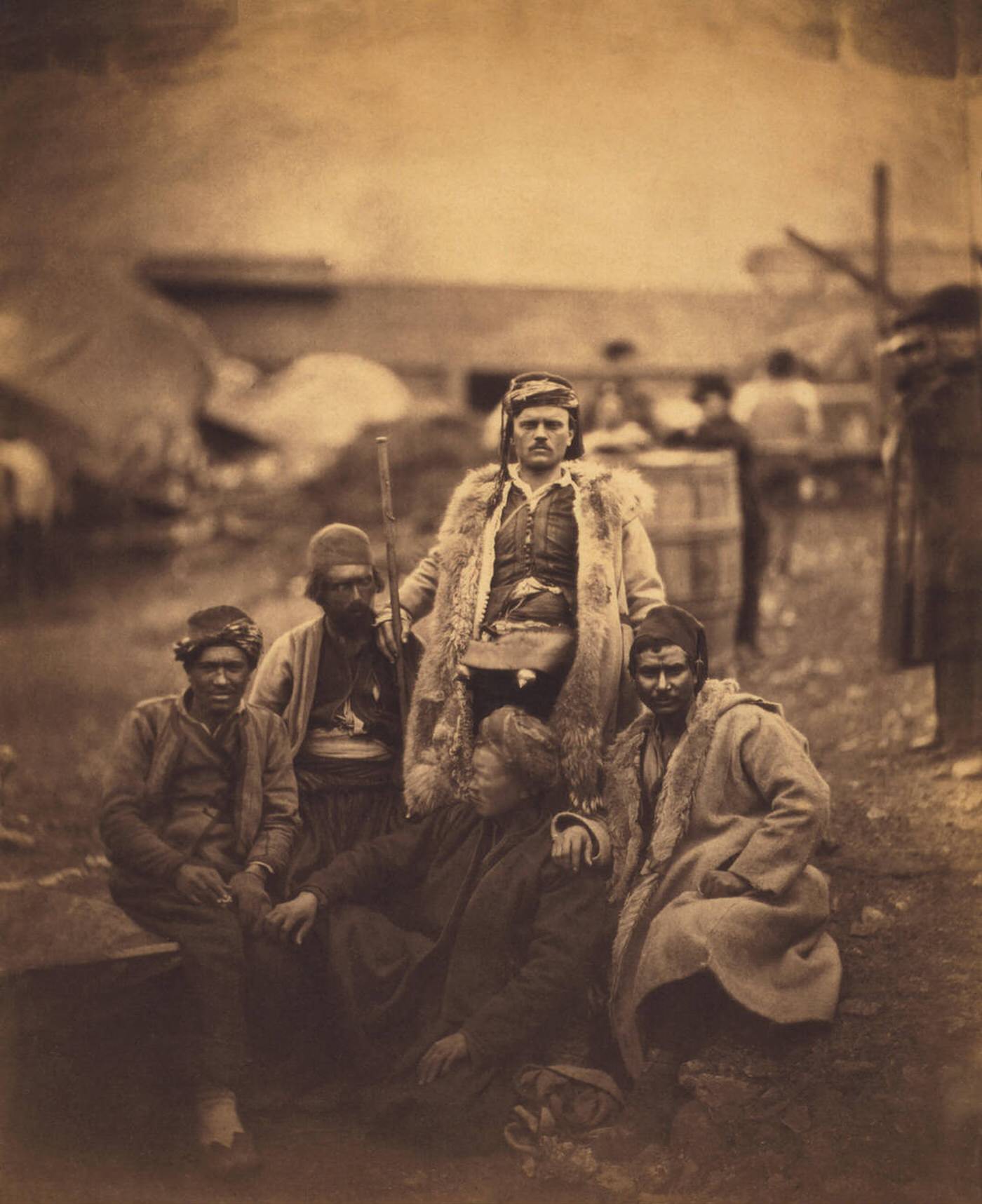
Four men gather close to the camera in a rough camp setting, their expressions steady and unembellished in the way mid-19th-century portraiture often demanded. Heavy coats and fur-trimmed outerwear dominate the scene, suggesting cold weather and hard conditions; headscarves and caps add to the sense of practical dress rather than parade-ground uniform. One figure stands slightly elevated behind the others, creating a quiet hierarchy of posture, while the group’s relaxed but guarded poses hint at long days of labor and waiting.
Behind them, blurred shapes of tents or temporary shelters, a large barrel, and indistinct figures at work evoke the logistical world that kept armies moving during the Crimean War. The background feels busy yet distant, as if the photographer chose to freeze a brief pause amid hauling, building, and provisioning. Even without visible tools in every hand, the setting reads as a working space—muddy ground, makeshift structures, and the everyday clutter of a military encampment.
Croat laborers like these rarely sit at the center of popular Crimean War narratives, which more often spotlight generals, battles, and diplomacy. Images such as this one bring attention to the multinational workforce that sustained campaigns through transport, construction, and supply tasks essential to warfare. For readers interested in 1855, wartime labor, and the human texture of military history, this photograph offers a grounded, intimate counterpoint to the era’s grander scenes.