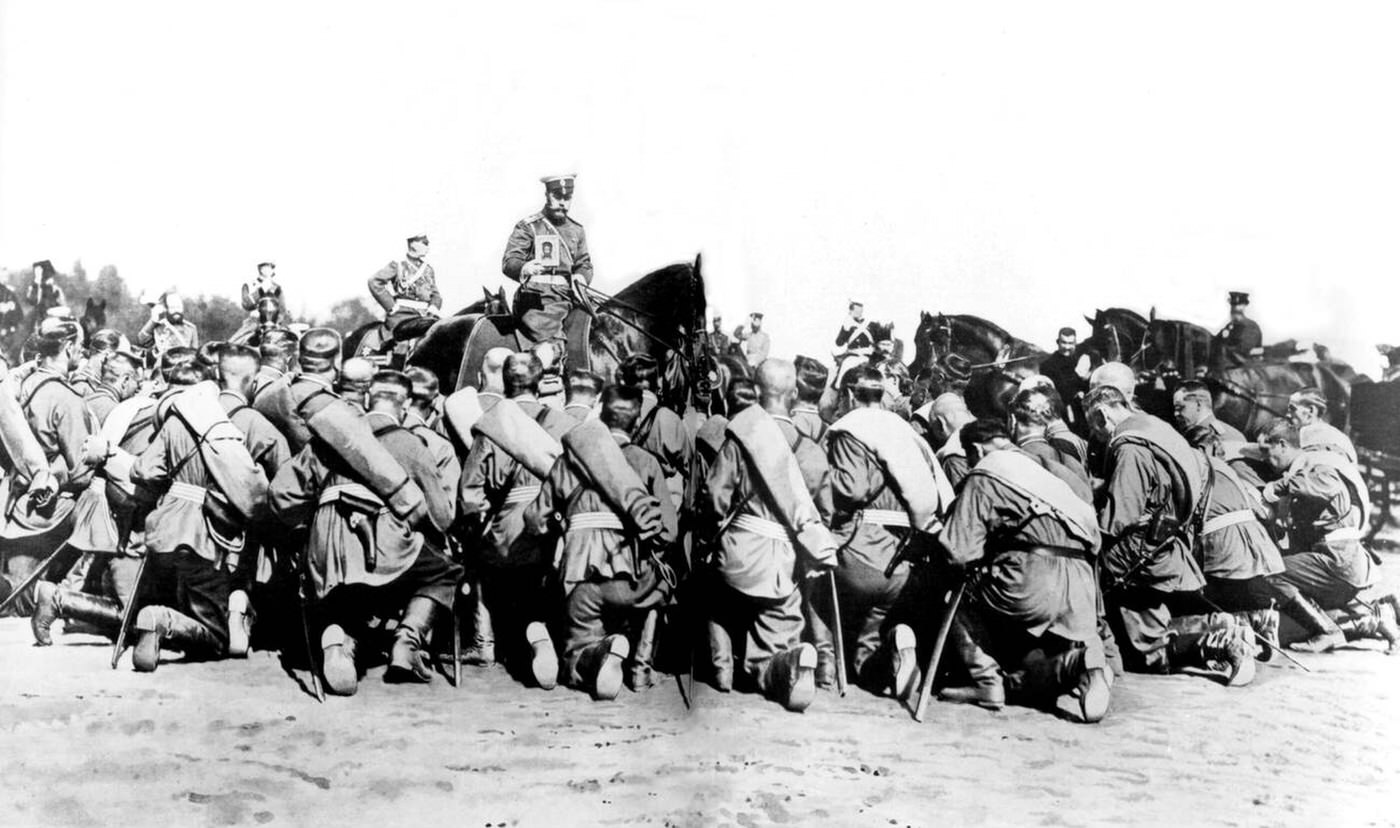
Kneeling ranks fill the foreground, greatcoats creased at the shoulders and bedrolls strapped tight, as a mounted figure presides over the scene with an icon held close. The title identifies the rider as Tsar Nicholas II, offering a solemn blessing to a regiment departing for the Russo-Japanese War in 1904. Around him, officers and attendants cluster on horseback, forming a ring of authority above the bowed heads of enlisted men.
What stands out is the choreography of loyalty: helmets and caps aligned, rifles grounded, bodies lowered in unison as if the entire unit has become a single congregation. The horses, dark and steady, underline the ceremonial grandeur of imperial Russia—pageantry meant to reassure, to sanctify, and to send soldiers forward with a sense of destiny. Even without hearing a word, the photograph communicates the ritual language of empire, faith, and military discipline.
Placed in the wider context of the Russo-Japanese War, this moment reads as both blessing and prelude, capturing how the Romanov state framed conflict in spiritual and patriotic terms. For readers searching military history, Tsar Nicholas II, or early-20th-century Russia, the image offers a vivid entry point into the culture that surrounded mobilization and departure. It preserves a brief pause before the hardships of campaign, when ceremony could still promise certainty to men about to be swallowed by modern war.