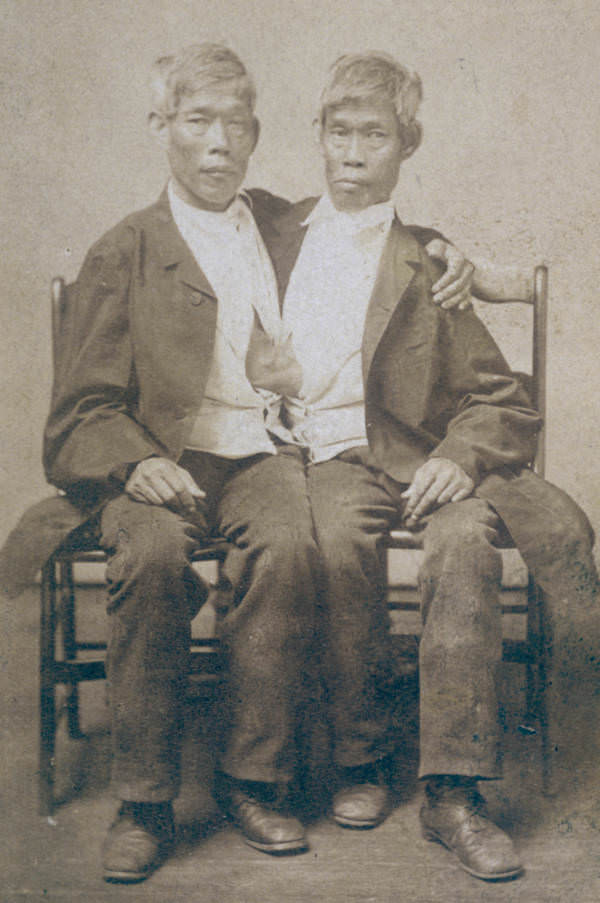
Chang and Eng Bunker sit close together on two plain wooden chairs, dressed in dark coats and light shirts that read crisply against the simple studio backdrop. Their posture is formal yet intimate, with one arm resting across the other’s shoulders, a composed gesture that draws the viewer’s eye to the bond at the center of the portrait. The camera’s steady gaze captures not spectacle but presence: two men meeting the lens with a calm, direct seriousness.
Taken in 1865, the photograph reflects the conventions of mid-19th-century portraiture—staged seating, minimal props, and clothing chosen to signal respectability. Details like the worn chair rungs, the careful arrangement of hands, and the even lighting suggest a professional studio intent on clarity and dignity. As a historical image, it offers more than a medical curiosity; it preserves a moment of self-presentation within the era’s visual language.
Readers searching for Chang and Eng Bunker, the origin of the term “Siamese twins,” or the broader history of conjoined twins in popular culture will find this portrait especially striking. It invites a closer look at how photography shaped public understanding of difference, fame, and identity in the 19th century. Beyond the title’s headline fact, the scene lingers as a quiet record of companionship and endurance, rendered in the straightforward honesty of early photographic art.