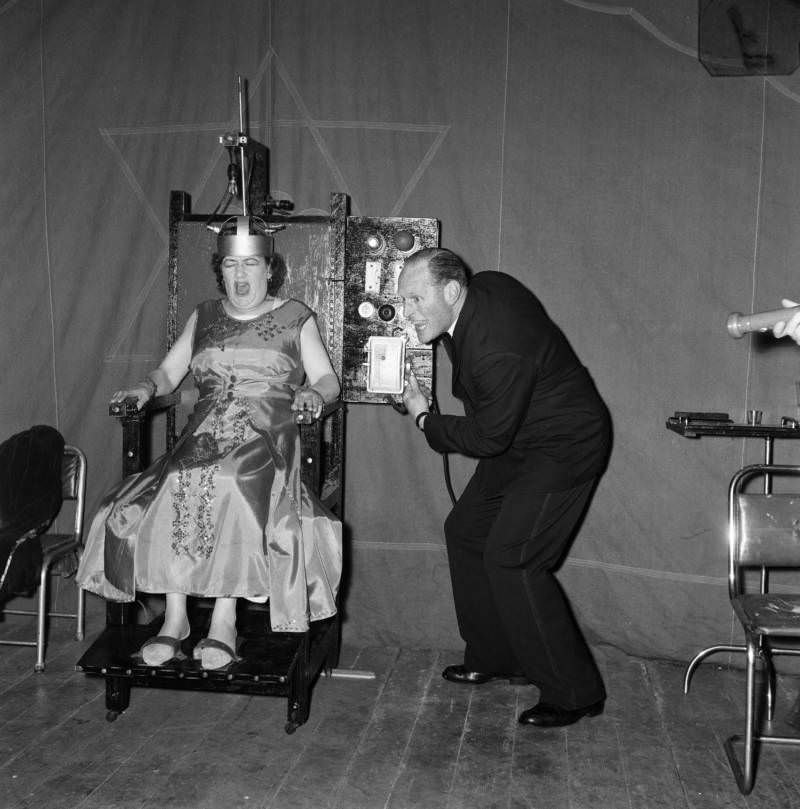
Under the canvas of a travelling fairground show in Boston, Lincolnshire, a woman sits strapped into a heavy chair, her hands clenched on the armrests as a headpiece and wiring turn the scene into something between stage magic and laboratory theatre. Her dress is evening-smart, yet the set-up is all bolts, switches, and a stark wooden platform, the kind of props designed to make harmless electricity look menacing. The moment is caught at full intensity—her expression wide, the pose dramatic—suggesting performance as much as peril.
To her right, a suited man leans in with a showman’s grin beside a control box crowded with dials and lights, selling the illusion that he’s “administering” a dangerous shock. A spectator’s hand intrudes from the edge of the frame, a small reminder that this was meant to be watched, reacted to, and talked about afterward. Even without hearing the barker’s patter, the photograph communicates how mid-century sideshows relied on spectacle, suggestion, and a dash of pseudo-science to thrill ordinary crowds.
Fairground entertainment in the 1950s still carried echoes of earlier eras—part vaudeville, part novelty act—where electricity could be marketed as both modern wonder and comic threat. The title’s stark phrasing plays into that tradition, but the staging points toward controlled trickery rather than genuine harm, with theatrical framing doing most of the work. For readers drawn to British social history, oddball attractions, and vintage fairground culture, this 1957 scene offers a vivid glimpse into the tastes, fears, and fascinations that once filled the tent.